Home Improvement
Luxury Home Construction Cost: Complete 2026 Guide to Building a High-End Custom Home
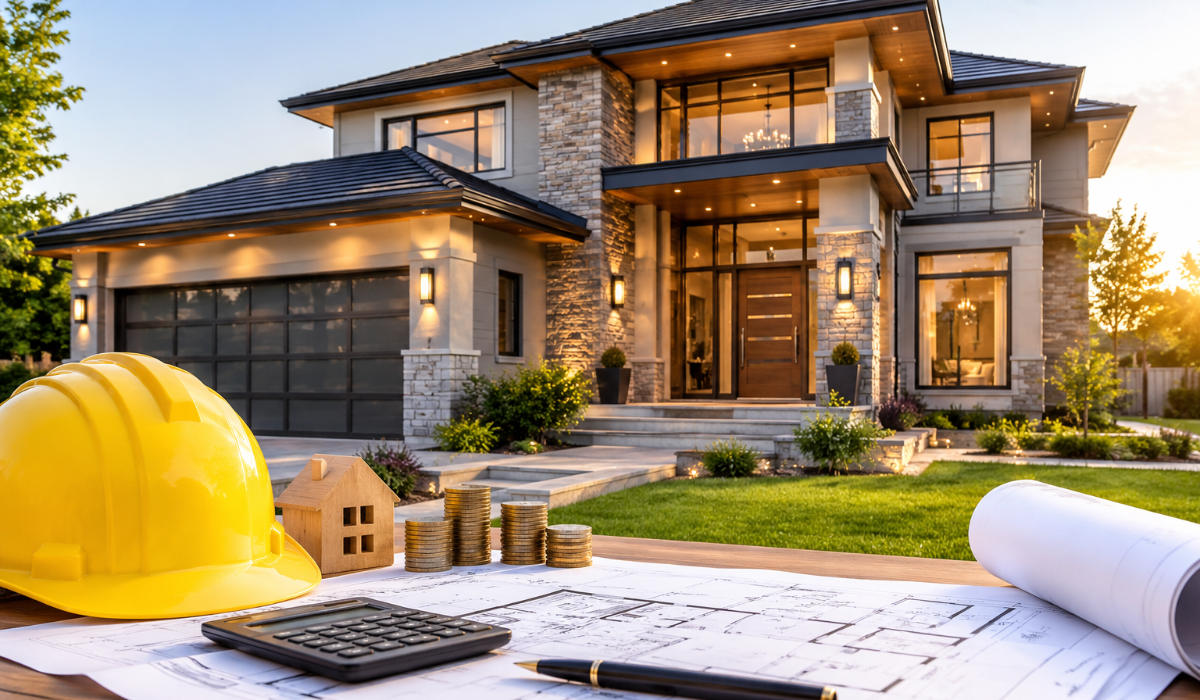
Understanding luxury home construction cost is essential before committing to a custom residence, because high-end construction involves far more than multiplying square footage by a price per square foot. A luxury home may include architectural design, premium materials, sophisticated mechanical systems, custom cabinetry, smart-home technology, specialty glazing, landscaping, pools, outdoor kitchens, and other features that can dramatically change the final budget. In 2026, luxury custom-home construction in the United States commonly falls into a broad range of roughly $400 to $1,200+ per square foot, while exceptionally complex or trophy-level projects can exceed $1,500 or even $2,000 per square foot in premium markets. Builder-published 2026 pricing guides show similarly wide ranges, reinforcing that there is no single national luxury construction rate.
The most important point is that luxury home construction cost depends on what is included in the quoted price. A builder may quote only hard construction costs, while another estimate may include architectural services, permits, landscaping, appliances, technology, or project management. Location also matters enormously, because labor availability, building regulations, site conditions, material logistics, and local market conditions can shift costs substantially. This guide explains the major cost drivers, realistic 2026 price ranges, budgeting methods, common mistakes, and practical strategies for building a luxury home without losing control of the project.
Key Takeaways
- Luxury custom-home construction commonly starts around $400–$550 per square foot and can rise to $750–$1,200+ per square foot for highly customized estates.
- Ultra-luxury homes in exceptional locations can exceed $1,500–$2,000+ per square foot.
- A 5,000-square-foot luxury home could therefore have a construction budget ranging from approximately $2 million to $6 million or more, depending on specifications.
- Land, architecture, engineering, permits, financing, landscaping, furnishings, and other soft costs may be outside the builder’s construction quote.
- Interior finishes are one of the largest cost categories in conventional home construction, and luxury specifications can magnify that expense.
- Complex sites, basements, retaining walls, steep lots, waterfront locations, and difficult access can substantially increase costs.
- Imported stone, custom millwork, specialty windows, advanced HVAC, home automation, elevators, pools, and elaborate outdoor spaces can quickly increase the budget.
- A realistic contingency reserve is essential because luxury projects often involve custom products and long procurement timelines.
- The best way to control luxury home construction cost is to establish a detailed scope and specification before construction begins.
What Is the Average Luxury Home Construction Cost?
There is no universally accepted definition of a “luxury home,” which is why published cost estimates vary so widely. A high-end custom home in one suburban market may cost several hundred dollars per square foot, while an architect-designed estate in a major coastal market can cost more than $1,000 per square foot before land and furnishings. Current 2026 builder guides place many luxury custom projects between roughly $450 and $1,200+ per square foot, with ultra-luxury projects extending considerably higher.
For practical planning, it is better to think in cost tiers rather than searching for one “average” number. A home with premium but readily available materials can sit toward the lower end, while a highly personalized architectural residence with imported finishes and specialty systems can occupy the upper end. The difference between those two projects may be greater than the difference created by adding another 500 square feet. This is why a detailed specification is more useful than a generic online calculator when determining luxury home construction cost.
2026 Luxury Construction Cost Tiers
| Luxury Level | Approx. Construction Cost/Sq. Ft. | Typical Characteristics |
| Premium Custom | $400–$550+ | High-quality finishes, custom layouts, upgraded systems |
| True Luxury | $550–$750 | Premium stone, custom cabinetry, advanced HVAC, architectural detailing |
| Bespoke Luxury | $750–$1,200+ | Imported materials, extensive millwork, smart-home systems, specialty glazing |
| Ultra-Luxury | $1,200–$1,500+ | Exceptional craftsmanship, highly customized systems, complex architecture |
| Trophy-Level | $1,500–$2,000+ | Landmark locations, rare materials, extreme customization, complex engineering |
These ranges are planning benchmarks rather than guaranteed market prices. Builder sources reporting 2026 projects in different U.S. markets show that luxury pricing can vary substantially by region and specification.
Luxury Home Cost Per Square Foot
Cost per square foot is useful because it provides a quick way to compare different home sizes and construction tiers. However, it should never be treated as a final quotation. The denominator itself can differ between builders, with some using conditioned living area and others using a broader definition of constructed or covered space. Luxury projects also contain expensive components such as pools, elevators, landscape construction, detached structures, and site improvements that may not fit neatly into a simple square-foot calculation.
For example, a 5,000-square-foot house at $600 per square foot would imply approximately $3 million in hard construction costs. At $900 per square foot, the same footprint would cost approximately $4.5 million. At $1,200 per square foot, it would reach approximately $6 million before considering costs that are excluded from the construction contract.
Example Construction Budgets
| Home Size | $500/Sq. Ft. | $750/Sq. Ft. | $1,000/Sq. Ft. | $1,250/Sq. Ft. |
| 3,000 sq. ft. | $1.50M | $2.25M | $3.00M | $3.75M |
| 4,000 sq. ft. | $2.00M | $3.00M | $4.00M | $5.00M |
| 5,000 sq. ft. | $2.50M | $3.75M | $5.00M | $6.25M |
| 6,000 sq. ft. | $3.00M | $4.50M | $6.00M | $7.50M |
| 8,000 sq. ft. | $4.00M | $6.00M | $8.00M | $10.00M |
These figures are mathematical examples rather than market quotations. They demonstrate why defining your target specification is critical before selecting a budget. Current luxury builder guides show that $750–$1,000+ per square foot is realistic for some highly customized markets, while other locations can be lower or higher.
What Is Included in Luxury Home Construction Cost?
One of the biggest sources of confusion is assuming that every builder’s price includes the same things. A construction proposal may include foundations, framing, roofing, windows, electrical, plumbing, HVAC, drywall, flooring, cabinetry, and painting while excluding architecture, interior design, land, permits, financing, landscaping, furniture, or specialized technology. Another builder may package many of these items into a broader turnkey contract.
Before comparing two proposals, create a written inclusions and exclusions schedule. This document should identify exactly which materials, fixtures, systems, labor, design services, site improvements, and allowances are included. Without that comparison, the cheapest quote can appear attractive while actually containing substantial omissions.
Typical Construction Inclusions
- Site preparation and excavation
- Foundation and structural work
- Framing and roofing
- Exterior cladding
- Windows and exterior doors
- Plumbing rough-ins and fixtures
- Electrical wiring and fixtures
- Heating, ventilation, and air conditioning
- Insulation and drywall
- Flooring
- Interior doors and trim
- Cabinets and countertops
- Painting
- Basic landscaping or exterior work, if specified
- Final cleaning and completion work
The precise scope varies by builder and contract. For comparison, the National Association of Home Builders’ 2024 survey found that conventional construction costs were spread across site work, foundations, framing, exterior finishes, major systems, interior finishes, final steps, and other costs.
Major Factors That Affect Luxury Home Construction Cost
Location
Location can influence labor rates, permitting requirements, transportation, subcontractor availability, building codes, and material costs. A luxury home in a high-cost metropolitan area may require substantially more investment than a similar house in a lower-cost region. Premium coastal, mountain, resort, and urban markets can also have unique engineering and regulatory requirements.
NAHB data illustrates how dramatically regional construction pricing can differ even among ordinary custom homes. Its analysis of 2024 custom contractor-built homes found median prices above $190 per square foot in New England, compared with $129 or below in the East South Central region. Those figures are not luxury rates, but they clearly demonstrate the effect of geography on construction pricing.
Lot and Site Conditions
A flat, accessible lot with reliable utilities is generally easier to build on than a steep hillside, rocky site, waterfront property, or constrained urban lot. Excavation, retaining walls, soil stabilization, drainage, blasting, foundation reinforcement, and difficult material access can all increase luxury home construction cost.
The site should therefore be investigated before the architectural design is finalized. A geotechnical investigation, topographic survey, utility review, environmental assessment where necessary, and preliminary site plan can reveal problems before they become expensive construction changes.
Architectural Complexity
Simple rectangular buildings are generally more efficient to construct than highly articulated structures. Curved walls, dramatic cantilevers, large open spans, complex rooflines, double-height spaces, unusual structural systems, and extensive glass can require additional engineering and specialized labor.
Architectural complexity can be worthwhile when it creates a distinctive residence, but homeowners should understand that every unusual detail can carry a cost beyond its visible material price. A curved staircase, for example, may require custom fabrication, specialty engineering, and longer installation time.
Materials and Finishes
Materials are one of the most obvious drivers of luxury construction cost. Natural stone, rare wood species, custom metalwork, handcrafted plaster, imported tile, specialty glass, premium hardware, and bespoke cabinetry can all cost significantly more than standard alternatives.
The key issue is not simply whether a material is expensive. Availability, fabrication requirements, shipping, installation difficulty, waste, lead times, and replacement availability can also influence the final cost.
Mechanical and Electrical Systems
Luxury homes increasingly incorporate sophisticated HVAC, lighting, security, networking, audio/video, water treatment, backup power, energy management, and automation systems. These systems can improve comfort and performance, but they require careful coordination between architects, engineers, electricians, mechanical contractors, and technology specialists.
A conventional house may have relatively straightforward electrical and HVAC systems. A luxury residence might instead require multiple HVAC zones, dedicated equipment rooms, concealed ventilation, structured wiring, motorized shades, whole-house automation, generator integration, and specialized lighting control.
Size
More square footage generally means a larger construction budget, but size alone does not determine luxury home construction cost. A smaller house with extremely expensive finishes can cost more per square foot than a larger home using moderately premium specifications.
This is why “smaller but better” can sometimes be an effective luxury strategy. Reducing unnecessary corridors and oversized rooms can free money for better materials, stronger detailing, better windows, improved mechanical systems, and higher-quality craftsmanship.
Hard Costs vs. Soft Costs
A luxury home budget should be divided into at least two broad categories: hard costs and soft costs. Hard costs generally represent the physical construction of the property, including labor and materials. Soft costs cover professional services, approvals, financing, design, project management, and other expenses that are necessary to complete the project but are not physical building components.
This distinction is particularly important when evaluating online estimates. A figure of $600 per square foot may sound like the total project budget, but it could actually represent only the builder’s hard construction scope. Some 2026 luxury guides estimate that land, soft costs, furnishings, and other items can add roughly 25%–40% or more to construction investment, depending on the project.
Hard and Soft Cost Comparison
| Cost Category | Usually Included in Construction? | Examples |
| Hard Costs | Usually | Labor, materials, structure, finishes |
| Architecture | Often separate | Design drawings, construction documents |
| Engineering | Often separate | Structural, civil, mechanical engineering |
| Permits | Varies | Building permits, impact fees, inspections |
| Interior Design | Often separate | Space planning, selections, furnishings |
| Landscaping | Varies | Planting, irrigation, hardscape |
| Pool | Often separate | Pool, spa, equipment, decking |
| Furniture | Usually separate | Sofas, beds, artwork, accessories |
| Financing | Usually separate | Construction loan interest and fees |
| Land | Separate | Lot purchase and acquisition costs |
NAHB’s 2024 construction-cost survey demonstrates why these distinctions matter. In its conventional single-family sample, total construction averaged $428,215, while finished lot costs averaged $91,057 and additional categories included financing, overhead, marketing, sales commissions, and profit.
Luxury Home Cost Breakdown
Understanding where the money goes is more valuable than knowing a single headline number. NAHB’s national 2024 data shows interior finishes as the largest broad construction category at 24.1%, followed by major system rough-ins at 19.2%, framing at 16.6%, exterior finishes at 13.4%, foundations at 10.5%, site work at 7.6%, and final steps at 6.5%.
Luxury construction follows the same basic logic but can have dramatically different proportions. Premium cabinetry, stone, windows, millwork, mechanical systems, lighting, and technology can represent much larger absolute amounts than they would in a typical home.
Construction Cost Categories
| Category | Typical Role in Budget | Luxury Examples |
| Site Work | Site-dependent | Excavation, grading, retaining walls |
| Foundation | Structural | Basement, concrete, waterproofing |
| Framing | Structural | Steel, engineered lumber, large spans |
| Exterior | Building envelope | Stone, stucco, metal roofing, premium windows |
| Mechanical | Comfort/performance | Zoned HVAC, radiant heating, geothermal |
| Electrical | Power/control | Architectural lighting, automation, backup power |
| Interior | Major finish expense | Flooring, millwork, cabinets, stone |
| Final Work | Completion | Landscaping, driveway, outdoor structures |
The most expensive projects often experience cost growth across several categories simultaneously. For example, a hillside estate may require more excavation, structural engineering, retaining walls, waterproofing, specialized windows, and transportation logistics. The result is not one expensive line item but a chain reaction across the entire project.
What Are the Most Expensive Luxury Home Features?
Some features have an outsized impact on luxury home construction cost because they combine expensive materials with specialized labor or engineering. The biggest examples include:
Custom Kitchens
A luxury kitchen can include custom cabinetry, natural stone slabs, specialty appliances, integrated refrigeration, concealed ventilation, custom metalwork, stone backsplashes, large islands, and sophisticated lighting. The cost can rise quickly when every cabinet, panel, and hardware component is made specifically for the project.
Spa-Style Bathrooms
Large-format stone, bookmatched slabs, steam showers, heated floors, custom vanities, specialty plumbing fixtures, soaking tubs, integrated lighting, and waterproofing details can turn a bathroom into a significant construction expense.
High-End Windows and Doors
Large sliding glass walls, oversized fixed panes, steel or aluminum systems, specialty glazing, motorized shades, and custom entrance doors can be substantially more expensive than standard products. Their structural requirements can also affect framing and engineering.
Home Automation
A sophisticated smart home may integrate lighting, HVAC, security, access control, entertainment, shades, networking, energy management, and surveillance. The system should be designed early because wiring, equipment rooms, electrical capacity, and control infrastructure must be coordinated before walls are closed.
Pools and Outdoor Living
Infinity pools, spas, outdoor kitchens, cabanas, fire features, water features, landscape lighting, retaining walls, and elaborate planting can transform the exterior budget. Outdoor spaces should therefore be treated as part of the total project rather than an afterthought.
Elevators and Specialty Features
Residential elevators, wine cellars, theaters, gyms, indoor pools, golf simulators, safe rooms, galleries, and specialty garages can all add significant cost. They also affect structural design, mechanical systems, electrical requirements, and ongoing maintenance.
Luxury vs. High-End vs. Ultra-Luxury Construction
The term “luxury” covers several different levels of construction quality. A premium custom home may have excellent materials and craftsmanship without using rare or highly bespoke components. A true luxury residence generally introduces more customization, while ultra-luxury projects may involve nearly every element being individually designed, fabricated, and installed.
| Feature | High-End Custom | Luxury Custom | Ultra-Luxury |
| Architecture | Custom | Highly customized | Bespoke |
| Flooring | Premium hardwood/tile | Natural stone, specialty wood | Rare/imported materials |
| Cabinetry | Semi-custom/custom | Fully custom | Bespoke millwork |
| Windows | Premium | Specialty systems | Architectural glazing |
| HVAC | Multi-zone | Advanced zoning | Highly engineered systems |
| Automation | Selective | Whole-home | Fully integrated |
| Lighting | Designer | Architectural | Fully custom |
| Exterior | Premium finishes | Stone/metal/stucco | Rare materials and detailing |
| Outdoor | Patio/deck | Pool and outdoor kitchen | Estate-scale landscape |
| Typical Complexity | Moderate | High | Very high |
There is no universal price boundary between these categories. What matters is the specification and local market. Current 2026 builder data shows luxury projects ranging from approximately $400 per square foot to well above $1,000 per square foot, depending on complexity and location.
How Location Changes Construction Pricing
The same architectural plans can have dramatically different costs in different regions. Labor rates, subcontractor competition, local building codes, energy requirements, permitting processes, transportation distances, weather conditions, and market demand all influence the final number.
Construction pricing also remains exposed to material-market changes. NAHB reported in January 2026 that residential construction input price growth remained above 3% through much of the second half of 2025, while metal products continued to experience significant price increases.
Regulatory requirements can also have a meaningful effect. A June 2026 NAHB analysis estimated that federal, state, and local regulations added $131,734 to the price of an average new single-family home, although that figure relates to the broader U.S. housing market rather than luxury homes specifically.
For a luxury project, the practical lesson is simple: never use a national average as your final budget. Get local estimates from architects, builders, engineers, and specialty contractors who understand the exact site and local approval environment.
How to Create a Realistic Luxury Home Budget
A successful luxury project starts with a budget that is detailed enough to guide design decisions. Instead of saying, “I want to spend $4 million,” divide the budget into land, construction, professional services, interiors, exterior improvements, financing, and contingency.
Start by defining the total amount you are comfortable investing. Then establish how much of that amount should be allocated to the house itself. This prevents the common mistake of spending the entire budget on construction and discovering later that landscaping, furniture, design fees, technology, or financing were never included.
Recommended Budget Planning Process
- Define the total investment ceiling.
- Separate land from construction.
- Establish the desired square footage.
- Select the luxury specification level.
- Obtain a preliminary site assessment.
- Develop a conceptual floor plan.
- Create a preliminary cost plan.
- Price major selections early.
- Add professional fees and project expenses.
- Reserve a contingency.
- Finalize construction documents.
- Obtain comparable builder proposals.
A useful approach is to establish three numbers: the target budget, the working budget, and the absolute ceiling. The target is what you hope to spend, the working budget includes realistic project costs, and the ceiling is the point beyond which the project must be redesigned or reduced.
How Much Contingency Should You Have?
Luxury construction involves more customization than ordinary construction, which creates more opportunities for unexpected costs. Existing site conditions may differ from preliminary assumptions, specialty products can become unavailable, and design changes can create cascading impacts.
A contingency of approximately 10%–15% of the construction budget is a reasonable planning concept for many custom projects, although the appropriate percentage depends on how complete the design is, how well the site has been investigated, and how much uncertainty remains. A project with finalized drawings, engineered plans, fixed selections, and a thoroughly investigated site generally has less uncertainty than an early-stage concept.
The contingency should not be treated as spare money for upgrades. It should remain available for legitimate unknowns and necessary changes. If the project finishes below the contingency, the owner can then decide whether to retain the funds, add improvements, or reduce financing.
Ways to Control Luxury Home Construction Cost
Controlling cost does not mean choosing cheap materials. It means spending heavily where quality, performance, aesthetics, and long-term value matter most.
Prioritize High-Impact Areas
Invest first in components that are difficult or expensive to change later. These include structure, waterproofing, windows, insulation, HVAC infrastructure, electrical capacity, plumbing layouts, and building-envelope performance.
You can then make more flexible decisions about decorative items. Paint, some lighting fixtures, hardware, furniture, and accessories can often be upgraded later without reconstructing the house.
Simplify the Architecture
Complexity should have a purpose. If a complicated roofline or unusual structural detail does not meaningfully improve the home’s appearance, function, or experience, it may not justify its cost.
A clean architectural concept with excellent proportions can often feel more luxurious than an overly complicated house filled with unnecessary features.
Select Materials Early
Late material selections are a major source of budget problems. If the design specifies a rare stone or custom window system after construction begins, the project may face higher prices, delays, or redesign requirements.
Create a finish schedule early and identify approximate prices for major materials before finalizing the construction budget.
Use Allowances Carefully
Allowances can make a construction proposal look manageable while shifting uncertainty to the homeowner. A $15,000 kitchen allowance may be inadequate for a kitchen that the owner actually expects to cost $60,000.
For major luxury selections, use realistic allowances or obtain actual supplier quotations. This makes the construction budget much more reliable.
Luxury Home Construction Cost: Common Mistakes to Avoid
Using a Basic Construction Calculator
Online calculators are useful for initial research but are not substitutes for project-specific estimating. They rarely understand site complexity, custom architecture, premium finishes, or specialty systems.
Comparing Builders Only by Price
A low bid may contain fewer inclusions, lower allowances, or less comprehensive project management. Compare scope, specifications, allowances, exclusions, schedule, warranty, and builder experience before comparing the final numbers.
Designing Before Establishing the Budget
A homeowner can easily develop a beautiful 7,000-square-foot design before discovering that the desired specification exceeds the available budget. Budget and design should develop together.
Forgetting Exterior Improvements
Driveways, gates, walls, landscaping, irrigation, pools, terraces, outdoor kitchens, lighting, and drainage can represent a substantial amount of money. They should be included in the financial plan from the beginning.
Making Major Changes During Construction
Changes become expensive once work has started. They can involve demolition, redesign, new permits, material restocking, labor changes, schedule delays, and subcontractor remobilization.
Ignoring Lead Times
Luxury products can have long manufacturing periods. Specialty windows, imported stone, custom doors, lighting systems, appliances, and bespoke cabinetry should be ordered according to a carefully coordinated procurement schedule.
Spending Too Much on Square Footage
Extra space is not automatically extra luxury. A smaller residence with better natural light, stronger proportions, higher-quality materials, and carefully designed spaces can deliver a better experience than a much larger house filled with underused rooms.
Step-by-Step Luxury Home Construction Process
| Stage | Main Activities | Cost-Control Priority |
| 1. Feasibility | Site review, budget, goals | Identify major risks |
| 2. Concept Design | Layout, style, massing | Keep design aligned with budget |
| 3. Design Development | Materials, systems, details | Price major decisions |
| 4. Construction Documents | Technical drawings | Reduce ambiguity |
| 5. Bidding | Builder and subcontractor pricing | Compare equivalent scopes |
| 6. Permitting | Approvals and inspections | Allow sufficient time |
| 7. Construction | Site through finishes | Control changes |
| 8. Commissioning | Testing and inspections | Verify systems |
| 9. Handover | Final corrections and documents | Protect quality |
The process works best when the architect, builder, interior designer, engineers, and owner communicate continuously. Luxury construction is highly interconnected, so a change in one area can affect several others.
Is Building a Luxury Home Worth the Cost?
For the right homeowner, building a luxury custom home can provide benefits that an existing property cannot easily match. The owner controls the layout, materials, technology, energy performance, privacy, accessibility, outdoor spaces, and overall aesthetic. The home can also be designed around specific lifestyle needs rather than adapted from someone else’s decisions.
However, luxury construction is not automatically a better financial investment. Custom homes can include highly personal features that future buyers may not value at the same level. A theater, wine cellar, elaborate spa, or unusual architectural feature may provide tremendous personal enjoyment but may not return its full cost at resale.
The strongest approach is to distinguish between personal luxury and marketable luxury. Personal luxury includes features chosen primarily because you love them, while marketable luxury includes durable construction, excellent architecture, quality materials, efficient systems, strong layouts, and desirable amenities that are more likely to appeal to future buyers.
Expert Tips for Managing a High-End Build
Build the Team Before Finalizing the Design
An experienced luxury builder can identify constructability and cost issues before they become expensive design changes. Early contractor involvement can also improve material pricing, scheduling, subcontractor coordination, and value engineering.
Establish a Written Specification
The more expensive the home, the less useful vague descriptions become. “Luxury kitchen” or “premium flooring” is not specific enough for a multi-million-dollar project.
Specify brands, product lines, sizes, finishes, quantities, installation methods, and performance requirements whenever practical.
Price the Expensive Items First
Before becoming emotionally attached to a design, price the components that can move the budget most dramatically. These may include windows, exterior stone, roofing, kitchen cabinetry, major appliances, HVAC, elevators, pools, custom millwork, and specialty structural elements.
Keep a Decision Log
Record major design and material decisions, including dates, prices, alternatives, and responsible parties. This simple practice can reduce misunderstandings and make it easier to track budget changes.
Review the Budget Monthly
A luxury construction budget should be treated as a living financial document. Compare the original estimate, committed costs, actual payments, pending changes, remaining allowances, and contingency every month.
Quick Luxury Home Budget Checklist
- Land cost separated from construction cost
- Site survey completed
- Geotechnical conditions investigated
- Architectural fees included
- Engineering fees included
- Permit and approval costs included
- Builder’s scope clearly defined
- Major material allowances verified
- Kitchen budget confirmed
- Bathroom specifications confirmed
- Windows and doors priced
- HVAC system priced
- Smart-home system budgeted
- Landscaping included
- Pool and outdoor living included if applicable
- Appliances included
- Interior furnishings separated
- Financing costs considered
- Construction contingency reserved
- Builder contract reviewed professionally
The Bottom Line on Luxury Home Construction Cost
The most useful way to think about luxury home construction cost is not as a single number but as a combination of location, square footage, architectural complexity, material specification, site conditions, systems, labor, and project scope. In 2026, a broad planning range of roughly $400–$1,200+ per square foot is reasonable for many U.S. luxury custom projects, while exceptional estates can exceed that range substantially. Current builder data supports the existence of very wide pricing bands, while national NAHB data confirms that ordinary custom construction costs already vary significantly by region and continue to face material and labor pressures.
The most important budgeting decision is therefore not choosing the lowest cost per square foot. It is defining exactly what your number includes. A $3 million construction quote and a $3 million total project budget are two very different things if architecture, land, landscaping, furnishings, technology, financing, and contingency are excluded. Before construction begins, create a detailed scope, price major selections, investigate the site, compare builders on equivalent specifications, and maintain a contingency reserve.
Ultimately, the best luxury home is not necessarily the largest or most expensive one. It is a home where the budget is deliberately allocated to architecture, craftsmanship, comfort, performance, materials, and features that genuinely improve the owner’s experience. Careful planning gives you a much better chance of achieving that result without allowing luxury home construction cost to become an uncontrolled expense.
Frequently Asked Questions
What is the average luxury home construction cost per square foot?
In 2026, many U.S. luxury custom homes fall roughly between $400 and $1,200+ per square foot, depending on location and specifications. Ultra-luxury projects can exceed $1,500 per square foot.
How much does it cost to build a 5,000-square-foot luxury home?
At $500 per square foot, construction would be about $2.5 million. At $1,000 per square foot, the same home would cost about $5 million before excluded land, professional fees, furnishings, and other project expenses.
Does luxury home construction cost include the land?
Usually, no. Builder construction prices commonly cover the physical building work, while land acquisition, financing, architecture, furnishings, and some site improvements are budgeted separately.
What makes luxury home construction so expensive?
Premium materials, custom craftsmanship, complex architecture, advanced mechanical systems, specialty windows, smart-home technology, difficult sites, pools, elevators, and extensive outdoor spaces can all increase the budget.
Is $500 per square foot enough for a luxury home?
It can be sufficient for a premium custom home in some markets, especially with controlled architectural complexity and carefully selected materials. In expensive metropolitan or resort markets, $500 per square foot may provide a much more limited specification.