
Home Improvement
How to Clean a Dishwasher: A Complete Step-by-Step Guide
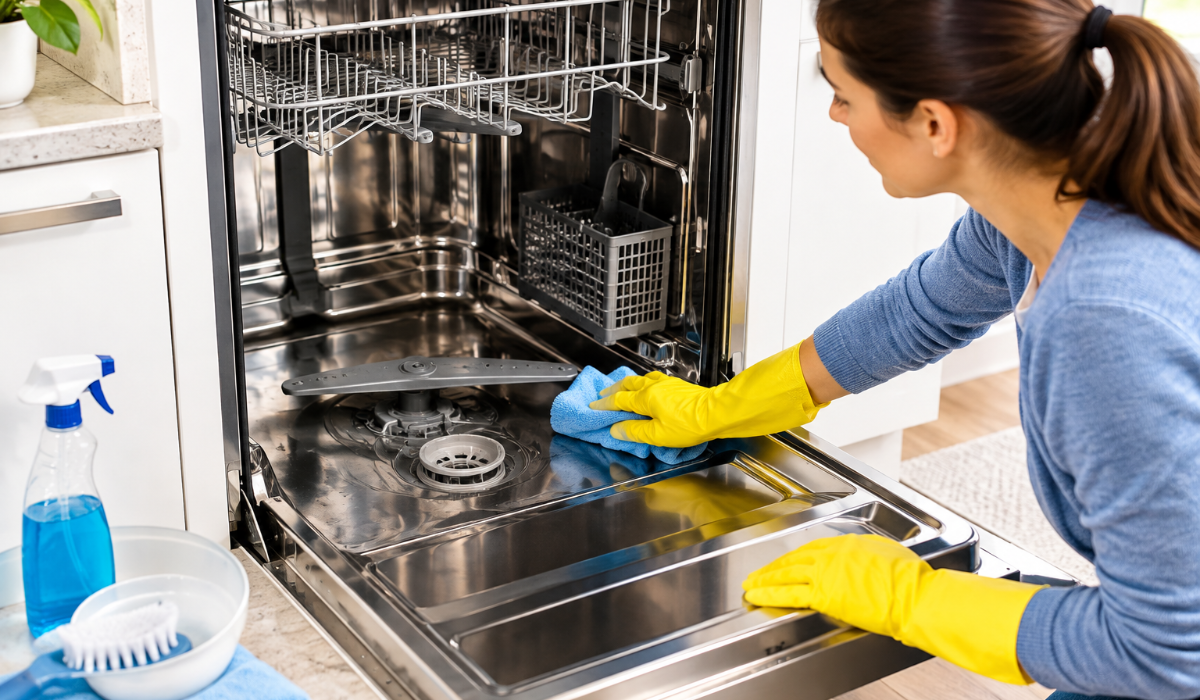
Learning how to clean a dishwasher is one of the simplest ways to improve appliance performance, reduce unpleasant odors, and keep your dishes coming out cleaner. Although a dishwasher regularly washes plates, glasses, and utensils, it does not automatically clean every part of itself. Food particles, grease, mineral deposits, detergent residue, and grime can gradually collect inside the filter, spray arms, door seal, drain area, and tub. When this buildup is ignored, you may notice cloudy glassware, dirty dishes, standing water, bad smells, or reduced cleaning performance.
The good news is that cleaning a dishwasher does not have to be difficult or expensive. With a soft brush, warm water, mild dish soap, a cloth, and an appropriate dishwasher cleaner, most routine maintenance can be completed in less than an hour. Manufacturer guidance commonly emphasizes cleaning the filter, checking spray-arm openings, wiping the interior and door seals, and using approved cleaning products according to the appliance manual.
This guide explains how to clean a dishwasher from top to bottom, including the filter, spray arms, racks, door gasket, drain area, interior, and exterior. You will also learn how often to clean each component, which methods to avoid, how to deal with odors and hard-water buildup, and when a dirty dishwasher may actually need professional attention.
Key Takeaways
- Clean the dishwasher filter regularly because it catches food particles and debris.
- Check and clean the spray arms when their small water jets become blocked.
- Wipe the door gasket, inner door, tub edges, and bottom corners where grime can accumulate.
- Use a dishwasher-specific cleaner when your appliance has significant grease, mineral deposits, or odor buildup.
- Vinegar can be useful for some dishwasher interiors, but always check the manufacturer’s instructions first.
- Never mix vinegar with bleach or other incompatible cleaning chemicals.
- Do not use abrasive brushes, harsh scouring pads, or aggressive cleaners on delicate dishwasher components.
- A dishwasher filter may need monthly cleaning, while spray arms can generally be inspected and cleaned every few months.
- Regular maintenance can help preserve cleaning performance and reduce odor-causing residue.
- Persistent drainage problems, leaks, unusual noises, or mechanical faults may require professional service.
Why You Need to Clean Your Dishwasher
A dishwasher is designed to clean dishes, but the water and debris removed during each cycle still pass through its internal filtration and drainage system. Food particles can collect in the filter, while grease and detergent residue may settle around the tub, door, and drain area. Hard water can also leave mineral deposits on the interior and spray-arm openings, gradually affecting water circulation. Bosch explains that dishwasher filters help prevent food particles from recirculating and protect the pump from debris, which makes filter maintenance an important part of appliance care.
A dirty dishwasher can also create a cycle of poor performance. When the filter becomes restricted, water may not circulate as effectively, and food particles can remain in the wash system. Blocked spray-arm jets can reduce the distribution of water across the racks, potentially leaving dishes with stuck-on food or detergent residue. GE Appliances similarly notes that excessive food debris can clog filters and that blocked wash-arm jets can reduce cleaning performance.
Cleaning also helps control odors. A dishwasher that smells unpleasant often has food residue or buildup in places that are not immediately visible, particularly around the filter and drain area. Wiping the gasket and interior surfaces removes residue that can contribute to stale smells. Keeping the appliance clean also makes it easier to identify genuine mechanical problems before they become more serious.
How Often Should You Clean a Dishwasher?
There is no single schedule that works perfectly for every household because dishwasher use varies considerably. A household that runs several loads every day will generally need more frequent filter maintenance than someone who uses the appliance once or twice a week. Whirlpool recommends monthly filter cleaning for many models, with more frequent cleaning appropriate for heavier use.
A practical maintenance schedule separates quick cleaning from deeper maintenance. Wiping the gasket and checking for food debris can be done regularly, while the filter deserves more deliberate attention. Spray arms and deep interior cleaning can usually be performed less frequently unless you notice specific symptoms such as poor cleaning, odor, or visible mineral deposits.
| Dishwasher Component | Suggested Maintenance | What to Look For |
| Filter | About monthly, or more often with heavy use | Food debris, grease, odor |
| Spray arms | Every few months | Blocked holes or weak water flow |
| Door gasket | Every few weeks or as needed | Food residue, slime, stains |
| Interior tub | Monthly or as needed | Grease, film, mineral deposits |
| Drain area | Inspect regularly | Standing water or debris |
| Racks | Monthly inspection | Food residue, rust, damaged coating |
| Exterior | Weekly or as needed | Fingerprints, spills, grime |
| Deep cleaning cycle | Monthly or according to product/manual | Odor, buildup, mineral deposits |
What You Need to Clean a Dishwasher
Before learning how to clean a dishwasher, gather the right supplies. Most routine maintenance requires only inexpensive household items, although a dishwasher-specific cleaning tablet or descaler can be useful for heavy buildup. Avoid assuming that stronger chemicals are better because dishwasher components can be sensitive to abrasive or corrosive products. Your owner’s manual should always take priority over general cleaning advice.
Basic Cleaning Supplies
You may need:
- Soft microfiber cloth
- Soft sponge
- Warm water
- Mild dish soap
- Small soft cleaning brush or old toothbrush
- Toothpick or appropriate small tool for spray-arm holes
- Dishwasher-safe container
- White vinegar, if approved for your model
- Dishwasher-specific cleaner or descaler
- Rubber gloves, if preferred
A soft brush is particularly useful for filters because it can remove stubborn particles without scratching delicate mesh. Whirlpool specifically warns against using wire brushes and abrasive scouring pads on dishwasher filters.
How to Clean a Dishwasher Step by Step
The easiest way to understand how to clean a dishwasher is to approach the appliance from the inside out. Start by removing loose debris, then clean the filtration system, spray arms, seals, interior surfaces, and racks. Finish with an appropriate cleaning cycle if the manufacturer allows it. This sequence prevents loose grime from being pushed into components that you have already cleaned.
Empty the Dishwasher
Remove all dishes, utensils, cookware, and removable accessories. Take out the lower rack and, if convenient, the upper rack so you can reach the bottom of the tub. Inspect the bottom for obvious pieces of food, broken glass, labels, toothpicks, or other objects. Use care when removing sharp debris because broken glass can cause injury.
Check the Bottom of the Tub
Look around the filter and drain area for large pieces of food or foreign objects. Remove anything that can be safely picked up without pushing debris deeper into the drainage system. If you see standing water, first determine whether it is normal residual water for your model or evidence of a drainage problem. Persistent standing water should not simply be covered up with a cleaning cycle.
Remove and Clean the Filter
The filter is one of the most important parts of dishwasher maintenance. Depending on the model, it may twist out, lift out, or form part of a larger filtration assembly. Always consult the owner’s manual before forcing a filter because designs vary between brands and models. Bosch recommends removing the filter according to the model instructions and cleaning it under running water with mild soap and a soft brush.
Clean the Spray Arms
Inspect the spray arms for blocked holes. Food particles and mineral deposits can obstruct the small jets that distribute water throughout the dishwasher. If the spray arms are removable, rinse them under warm water and carefully clear blocked openings with a suitable small tool. Bosch recommends checking and cleaning spray arms every few months and using a toothpick to loosen buildup from blocked openings.
Wipe the Door and Gasket
Open the dishwasher completely and inspect the inner door, corners, hinges, and rubber gasket. These areas can collect food splashes, grease, detergent residue, and moisture. Use a soft cloth or sponge with warm water and mild soap, then wipe away the loosened residue. Pay special attention to the bottom edge of the door because it can collect grime that is difficult to see when the appliance is closed.
Clean the Interior
Wipe the dishwasher tub with a soft cloth or sponge. Focus on the bottom corners, sides, door edges, and areas around the filter. If you see white mineral deposits, greasy film, or stubborn stains, use a dishwasher-safe cleaning method recommended by your manufacturer. Whirlpool recommends cleaning the interior with a sponge and warm water and notes that approved dishwasher cleaners can also help remove buildup and odors.
Clean the Racks
Inspect the racks for stuck-on food and signs of damaged coating. Wipe them with warm, soapy water and a soft cloth or sponge. If the rack coating is damaged and metal is exposed, monitor the area for rust because continued deterioration can damage dishes and the rack itself. Some racks can be removed easily, while others require following specific instructions.
Run an Appropriate Cleaning Cycle
Once the mechanical parts and surfaces have been cleaned, run an empty cleaning cycle if your dishwasher’s manual or cleaning-product instructions allow it. A dishwasher-specific cleaner can be particularly useful for grease, detergent residue, and mineral buildup. If you choose a household ingredient such as vinegar, verify that it is suitable for your appliance before use. Some manufacturers recommend specific quantities and placement methods, so avoid improvising with large amounts.
How to Clean a Dishwasher Filter
If you only have time for one maintenance task, cleaning the filter is an excellent place to start. The filter catches food particles and prevents debris from repeatedly circulating through the wash system. A clogged filter can contribute to dirty dishes, odors, and reduced performance. Whirlpool states that filters should be cleaned regularly and that heavy-use households may benefit from cleaning them more frequently than once a month.
Filter Cleaning Method
- Empty the dishwasher and remove the lower rack.
- Locate the filter at the bottom of the tub.
- Consult your manual for the correct removal method.
- Carefully remove the filter assembly.
- Rinse it under warm running water.
- Use a soft brush to loosen stubborn residue.
- Rinse away soap and debris.
- Inspect the filter mesh for damage.
- Reinstall the filter exactly as instructed.
- Make sure it locks securely before operating the dishwasher.
Do not run the appliance without a filter that is supposed to be installed. Whirlpool specifically advises ensuring the filter assemblies are correctly seated and locked before operating the dishwasher.
How to Clean Dishwasher Spray Arms
Spray arms are responsible for distributing pressurized water across the dishwasher cavity. Their small openings can become blocked by food particles, mineral deposits, or other debris. When this happens, some areas of the rack may receive less water than intended. Cleaning the spray arms can therefore be an important part of troubleshooting dishes that repeatedly come out dirty.
To clean a removable spray arm, take it out according to the manufacturer’s instructions and rinse it under warm water. Check every jet rather than inspecting only the largest openings. A toothpick or similar appropriate tool can help loosen small pieces of debris, but do not enlarge or damage the holes. Bosch recommends cleaning spray arms every few months and clearing blocked holes carefully.
How to Clean the Dishwasher Door and Gasket
The dishwasher door has several areas where residue can accumulate even though they do not receive the same water circulation as the main tub. The rubber gasket is particularly important because it creates a seal around the door. Food particles and greasy residue can become trapped along the gasket and surrounding edges. Regular wiping keeps these areas cleaner and helps you spot damaged seals.
Use warm water and a soft cloth to wipe the gasket from top to bottom. For stubborn residue, a small amount of mild dish soap can help loosen grime. Avoid aggressive scrubbing that could damage the rubber surface. After cleaning, wipe away excess moisture and inspect the gasket for cracks, gaps, or deformation.
How to Clean the Dishwasher Interior
The interior tub can develop several different types of buildup. Grease may create a dull film, detergent residue can leave deposits, and hard water can produce white mineral spots. Food particles may also collect around corners and the bottom of the tub. A good interior cleaning method addresses the type of buildup rather than relying on one chemical for every problem.
For light soil, use a soft sponge and warm water. For heavier mineral or grease buildup, consider a dishwasher-specific cleaner or descaler that is compatible with your model. Dishwasher manufacturers often provide specific recommendations because materials and finishes vary between appliances. Bosch, for example, recommends dishwasher cleaner for greasy residues and a descaler for stubborn hard-water deposits.
How to Clean a Dishwasher With Vinegar and Baking Soda
One of the most searched methods for how to clean a dishwasher involves vinegar and baking soda. These household ingredients can help freshen some dishwashers, but they should not automatically be considered suitable for every appliance. Vinegar is acidic, and repeated or excessive use may damage certain dishwasher components or finishes. Whirlpool specifically cautions that vinegar should not be used too frequently because its acidity can potentially cause damage.
If your manufacturer permits vinegar cleaning, Whirlpool’s guidance uses 2 cups, or 500 mL, of white vinegar in a glass or dishwasher-safe measuring cup placed upright on the lower rack. The dishwasher is then run through a complete cycle without detergent, with the drying option turned off or an appropriate air-dry setting used.
Baking soda can be used as a separate step when appropriate. Whirlpool recommends sprinkling 1 cup of baking soda in the bottom after a vinegar cycle and then running a hot-water cycle. Most importantly, vinegar and baking soda should not simply be mixed together in the same container because the ingredients react with each other instead of functioning as separate cleaning steps.
| Cleaning Method | Best For | Important Consideration |
| Warm water + soft cloth | Light interior grime | Safe routine maintenance |
| Mild soap + soft brush | Filter residue | Avoid abrasive tools |
| Dishwasher cleaner | Grease and general buildup | Follow product directions |
| Dishwasher descaler | Hard-water deposits | Confirm compatibility |
| White vinegar | Some odors and mineral film | Check manual; avoid overuse |
| Baking soda | Freshening and light residue | Use as a separate cycle when approved |
| Bleach | Certain non-stainless interiors | Never assume it is safe for your model |
How to Remove Dishwasher Odors
Bad dishwasher smells are often caused by trapped organic residue. Food particles can remain in the filter or around the drain area, while moisture can keep residue from drying completely. Cleaning the filter, spray arms, gasket, and interior is usually a better first step than simply adding a fragrance product. Whirlpool’s odor-removal guidance specifically recommends cleaning the drain filter and spray arms and then cleaning the interior.
Start by inspecting the filter for decomposing food. Next, check the spray arms and wipe the gasket and lower door edge. If the dishwasher still smells after physical cleaning, an approved dishwasher cleaner can help address deeper residue. If a persistent odor resembles burning plastic, chemicals, sewage, or electrical components, stop relying on cleaning methods and investigate the underlying issue.
How to Remove Hard-Water Deposits and White Film
Hard water contains minerals that can accumulate on dishwasher surfaces and dishes. The result may be cloudy glasses, chalky white film, deposits around spray-arm openings, or a rough-looking tub. Cleaning alone may temporarily remove the symptoms, but severe hard-water conditions can require descaling and appropriate water-hardness management. Bosch recommends using a dishwasher descaler for stubborn hard-water deposits and performing regular descaling according to appliance needs.
The correct solution depends on your dishwasher and water conditions. Some appliances have water-softening systems or adjustable hardness settings, while others rely on detergent and rinse-aid formulations. If mineral deposits return quickly after cleaning, investigate water hardness rather than repeatedly scrubbing the same surfaces. Whirlpool also notes that extremely hard water can make proper dishwasher cleaning more difficult and may require a water-softening solution.
How to Clean Dishwasher Racks and Accessories
Dishwasher racks are easy to overlook because they appear relatively clean after every cycle. However, food particles and detergent residue can collect around rack wheels, corners, tines, and other moving components. Pull the racks out and inspect them under good lighting. Wipe dirty areas with warm, soapy water and rinse them before returning them to the appliance.
Pay close attention to damaged vinyl or plastic coating. If the coating has chipped away and metal is exposed, rust may develop. A small damaged area may be repairable with a product designed specifically for dishwasher rack repair, but follow the manufacturer’s recommendations. Never use a rough abrasive pad simply to make the rack look cleaner because aggressive scrubbing can worsen surface damage.
How to Clean the Dishwasher Exterior
Exterior cleaning depends on the material of your dishwasher. Stainless steel surfaces usually benefit from a soft cloth and a suitable stainless-steel cleaning method, while painted or plastic surfaces can generally be wiped with mild soapy water. Avoid abrasive powders, rough sponges, and harsh chemicals unless the appliance manufacturer specifically approves them. Bosch recommends mild soapy water and a soft cloth for steel exteriors and cautions against abrasive cleaners and sponges.
Clean the control panel gently rather than saturating it with liquid. Spray cleaner onto a cloth instead of directly into buttons, seams, or electronic controls. Wipe fingerprints and food splashes away, then dry the surface. A clean exterior is not only more attractive but also makes it easier to notice leaks, damaged seals, or other physical problems.
Common Dishwasher Cleaning Mistakes
Knowing how to clean a dishwasher also means knowing what not to do. Many cleaning mistakes happen because people assume a dishwasher can tolerate the same chemicals and tools as a kitchen sink. In reality, the appliance contains filters, pumps, seals, coatings, sensors, heating components, and other parts that can be damaged by inappropriate cleaning methods.
Mistakes to Avoid
- Using too much vinegar: Vinegar is acidic and should not be used excessively.
- Mixing cleaning chemicals: Never combine vinegar with bleach or incompatible cleaners.
- Using bleach on stainless steel: Bleach can damage stainless-steel components and should not be used unless the manufacturer explicitly permits it.
- Scrubbing filters with wire brushes: Rough tools can damage filter material.
- Running the dishwasher without required filters: Incorrectly installed filtration can allow debris into areas it should not reach.
- Forcing removable parts: If a filter or spray arm does not release easily, check the manual.
- Ignoring standing water: Persistent drainage problems may indicate a clog or mechanical issue.
- Using excessive detergent: More detergent does not necessarily mean cleaner dishes and can contribute to residue.
- Ignoring hard-water buildup: Repeated mineral deposits may require descaling rather than stronger scrubbing.
- Cleaning only the visible tub: The filter, spray arms, gasket, and drain area are equally important.
Maytag warns that bleach is unsuitable for stainless-steel dishwasher interiors or stainless components and recommends checking the appliance manual before using household cleaning ingredients.
Dishwasher Cleaning Checklist
A simple checklist makes dishwasher maintenance much easier because you do not need to remember every component each time. Use a quick inspection for routine care and reserve deep cleaning for monthly or as-needed maintenance. The goal is consistency rather than spending a long time scrubbing the appliance every week.
| Task | Quick Maintenance | Deep Cleaning |
| Remove food debris | ✓ | ✓ |
| Inspect filter | ✓ | ✓ |
| Wash filter | ✓ | |
| Inspect spray arms | ✓ | ✓ |
| Clear spray-arm holes | ✓ | |
| Wipe gasket | ✓ | ✓ |
| Clean inner door | ✓ | |
| Clean racks | ✓ | |
| Wipe tub | ✓ | ✓ |
| Clean drain area | ✓ | ✓ |
| Run approved cleaner | ✓ | |
| Inspect exterior | ✓ | ✓ |
When to Call a Professional
Cleaning can solve many common dishwasher problems, but it cannot repair failed mechanical or electrical components. If your dishwasher continues to leave standing water after you have cleaned the filter and checked accessible drainage areas, the problem may involve the drain hose, pump, valve, or another component. Bosch notes that persistent drainage issues may require cleaning the pump area or professional assistance depending on the situation.
You should also consider professional service when the appliance leaks, makes unusual grinding or electrical noises, repeatedly stops mid-cycle, fails to heat water, or produces a persistent burning smell. Do not dismantle electrical components simply to perform deeper cleaning. Disconnecting power before handling components is important, and repairs involving wiring, motors, pumps, or heating elements should be handled by qualified personnel.
Best Practices for Keeping a Dishwasher Clean
The best approach to how to clean a dishwasher is prevention combined with periodic deep cleaning. You do not need to wait until the appliance smells bad or your dishes look dirty before maintaining it. A few simple habits can reduce the amount of buildup that develops between cleaning sessions. Manufacturer recommendations should always take priority because dishwasher designs differ.
Scrape Excess Food
You generally do not need to fully prewash dishes, but removing large pieces of food helps reduce the amount of debris entering the filtration system. GE Appliances specifically recommends scraping dishes before loading them to reduce food debris entering the dishwasher.
Inspect the Filter Regularly
Make filter inspection part of your normal kitchen maintenance routine. If you see food particles, grease, or an unpleasant smell around the filter, clean it rather than waiting for a performance problem.
Keep Spray Arms Clear
Every few months, check whether water can flow freely through the spray-arm holes. Blocked jets can prevent water from reaching dishes effectively.
Keep the Door Gasket Dry and Clean
Wipe the gasket periodically and leave the dishwasher door slightly open after a cycle when appropriate and safe for your kitchen setup. Allowing moisture to escape can help reduce stagnant smells and residue buildup.
Use the Correct Detergent
Choose detergent intended for automatic dishwashers and follow the dosage recommended for your water conditions and appliance. Avoid using ordinary hand dish soap because it can produce excessive suds and cause a major mess.
Use Rinse Aid When Appropriate
Rinse aid can improve drying and help reduce water spots on dishes for compatible appliances. If you have persistent cloudy glassware, consider whether water hardness, detergent selection, rinse aid, or temperature may be contributing to the problem.
Descale When Necessary
If your home has hard water, periodic descaling may be more useful than repeatedly scrubbing mineral deposits. Use a dishwasher-compatible descaler and follow the product instructions carefully.
Follow the Owner’s Manual
This is the most important expert tip. General cleaning advice cannot account for every dishwasher design, material, filter type, or manufacturer’s warranty requirements. When your manual gives different instructions from a generic internet cleaning method, follow the manufacturer’s instructions.
How the Main Cleaning Methods Compare
Different cleaning methods solve different problems. A dishwasher cleaner is often the most straightforward choice for routine deep cleaning because it is formulated specifically for the appliance. Vinegar may help with certain mineral films and odors when the manufacturer permits it, while baking soda can be useful as a separate freshening step. Physical cleaning of the filter and spray arms remains essential because no cleaning cycle can replace removing trapped debris manually.
| Method | Main Purpose | Cost | Effort | Best Use |
| Filter cleaning | Food debris | Low | Low | Routine maintenance |
| Spray-arm cleaning | Blocked jets | Low | Low | Poor wash performance |
| Dishwasher cleaner | Grease and residue | Medium | Low | Deep cleaning |
| Descaler | Mineral buildup | Medium | Low | Hard water |
| Vinegar cycle | Some odor/mineral film | Low | Low | Only when approved |
| Baking soda cycle | Freshening | Low | Low | Odor/light residue |
| Manual interior wipe | Surface grime | Low | Low | Regular maintenance |
Expert Tips for Better Dishwasher Performance
A clean dishwasher is only one part of good appliance care. Loading technique, detergent quantity, water temperature, water hardness, and cycle selection all influence cleaning results. If dishes remain dirty despite a clean filter and spray arms, do not automatically assume the appliance needs stronger chemicals. Look at the complete washing process before deciding that the dishwasher itself has failed.
One useful troubleshooting strategy is to change only one variable at a time. First inspect and clean the filter, then check the spray arms, then evaluate detergent and loading. If the problem remains, investigate water temperature, hardness, drainage, or the manufacturer’s troubleshooting guidance. This approach prevents you from repeatedly applying unnecessary cleaners without addressing the real cause.
For households that run the dishwasher daily, a simple routine can be especially effective. Check the filter periodically, wipe visible residue from the gasket, and perform a deeper cleaning about once a month or according to your appliance and cleaner instructions. Bosch recommends cleaning filters and spray arms periodically and describes dishwasher cleaner and descaler as part of regular maintenance.
Conclusion
Knowing how to clean a dishwasher can help you maintain better cleaning performance, control odors, and protect an appliance that works hard every day. The most important steps are surprisingly simple: remove debris, clean the filter, inspect the spray arms, wipe the door gasket and interior, maintain the racks, and use an approved dishwasher cleaner or descaler when appropriate. You do not need harsh chemicals or aggressive scrubbing to keep most dishwashers in good condition.
The key is to clean the parts that actually collect residue instead of relying entirely on an empty wash cycle. Filters need regular attention, spray arms need occasional inspection, and hard-water deposits may require a dedicated descaling approach. Household ingredients such as vinegar and baking soda can be useful in some situations, but manufacturer instructions should always come first because appliance materials and cleaning requirements vary.
If you make dishwasher maintenance part of your regular household routine, deep cleaning becomes faster and easier. Start with the filter and drain area, then work outward to the spray arms, seals, tub, racks, and exterior. Finally, remember that persistent leaks, drainage failures, electrical smells, or mechanical noises are not ordinary dirt problems and should be addressed by a qualified professional.
Frequently Asked Questions
How often should you clean a dishwasher?
For many households, cleaning the dishwasher filter about once a month is a practical starting point, although heavy use may require more frequent cleaning. Inspect the filter and spray arms sooner if you notice odors, debris, or poor cleaning performance.
What is the easiest way to clean a dishwasher?
The easiest method is to remove debris, clean the filter, check the spray arms, wipe the gasket and interior, and then run an approved dishwasher-cleaning cycle. This covers the areas where grime most commonly accumulates.
Can I use vinegar to clean my dishwasher?
Vinegar can be suitable for some dishwasher models, but it should only be used when the manufacturer permits it. Whirlpool recommends using 2 cups of white vinegar in a dishwasher-safe container for certain models while warning against excessive use.
Can I clean a dishwasher with vinegar and baking soda?
You can use vinegar and baking soda as separate cleaning steps when your dishwasher manufacturer allows both methods. Do not mix them together in the same step because they react with each other.
How do I clean a dishwasher filter?
Remove the filter according to your owner’s manual, rinse it under running water, and gently scrub stubborn debris with a soft brush. Reinstall it securely before operating the dishwasher.