Uncategorized
Wood Garden Decor: 30+ Beautiful Ideas to Transform Your Outdoor Space
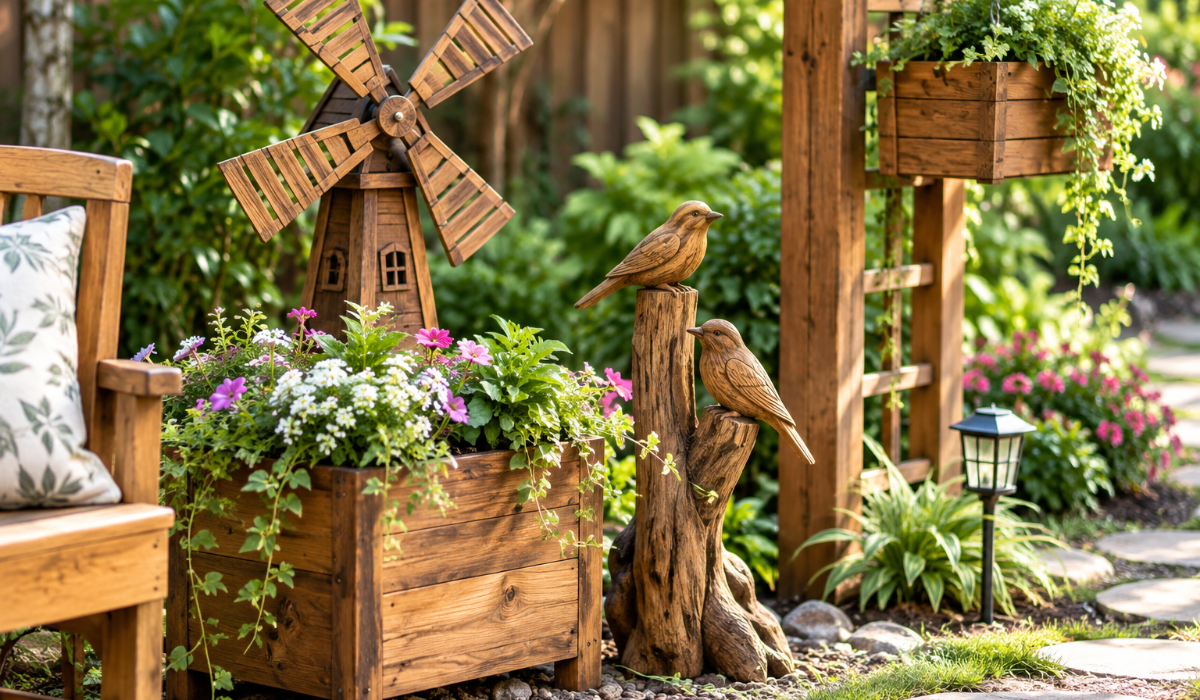
Wood garden decor has a timeless quality that can make almost any outdoor space feel warmer, more natural, and more inviting. From rustic wooden planters and handcrafted garden benches to elegant pergolas, trellises, raised beds, and decorative garden signs, wood works beautifully with flowers, greenery, stone, gravel, and other landscape materials. Unlike many synthetic materials, natural wood adds texture and visual warmth while allowing a garden to feel connected to its surroundings. With the right wood selection, construction methods, placement, and maintenance, wooden garden features can be both attractive and practical.
The best wood garden decor does more than simply fill an empty corner. It can define outdoor rooms, guide movement through a garden, create privacy, support climbing plants, provide seating, organize growing areas, and introduce focal points. Wood is also remarkably versatile, ranging from rough reclaimed boards for a farmhouse garden to smooth hardwood for a contemporary landscape. Whether you have a large backyard, a compact courtyard, a balcony garden, or a small patio, there are wooden garden decoration ideas that can fit your space and budget.
This guide explores the most useful and attractive ways to use wood outdoors, explains which materials work best, compares different design approaches, and provides practical advice for keeping wooden garden features looking good for years.
Key Takeaways
- Wood garden decor adds warmth, texture, character, and natural appeal to outdoor spaces.
- Wooden planters, benches, trellises, pergolas, arches, screens, raised beds, and signs are among the most versatile options.
- Cedar, redwood, oak, and other naturally durable woods can be excellent choices for outdoor applications, while treated softwood can offer a practical budget-friendly alternative.
- Moisture management is one of the most important factors affecting outdoor wood longevity.
- Keeping wooden features elevated from soil and allowing airflow can help reduce decay problems.
- Reclaimed wood can create distinctive garden decor, but it should be inspected carefully before use.
- Wood garden decor works particularly well when its color, scale, and style complement the architecture and planting scheme.
- DIY projects can range from simple painted signs and planter boxes to more advanced pergolas and garden structures.
- The best outdoor wooden decorations combine appearance with a clear purpose.
What Is Wood Garden Decor?
Wood garden decor refers to decorative, functional, or structural outdoor features made primarily from wood. These features can include small accessories such as garden signs, birdhouses, planter boxes, and sculptures, as well as larger structures such as benches, fences, pergolas, arches, raised beds, and privacy screens. Some pieces are designed mainly for visual appeal, while others combine decoration with practical gardening functions. The broad category gives homeowners plenty of flexibility because wood can be cut, shaped, stained, painted, carved, assembled, and repurposed in countless ways.
One of the biggest advantages of wood is that it works naturally with plants. Green foliage tends to look especially attractive against warm brown, gray, honey, or weathered wooden surfaces. A simple wooden trellis can disappear visually beneath climbing roses or vines while still providing essential structural support. Similarly, a timber raised bed can frame vegetables and flowers without competing with them for attention. RHS guidance also highlights timber as a versatile material for raised beds and garden structures.
Wood decor can also help create a sense of structure within an otherwise open garden. A pergola can mark the transition from one garden area to another, while a wooden arch can frame a pathway or doorway. A bench can establish a destination at the end of a planting border, and a screen can divide a patio into a more intimate outdoor room. In this way, decorative wood is not simply an accessory but part of the overall landscape design.
Why Choose Wood for Garden Decoration?
Wood remains popular because it combines visual warmth with practical versatility. It can soften hard landscaping materials such as concrete, brick, stone, and metal while introducing a natural material that relates visually to trees and planting. Wood also ages in an interesting way, developing changes in color and texture that can contribute to a mature garden aesthetic. Depending on the design, it can look rustic and handmade or clean, sophisticated, and architectural.
Another advantage is the variety of available designs. A homeowner can purchase ready-made wooden garden decor, commission custom pieces, or create simple projects using basic lumber. This makes wood suitable for beginners as well as experienced gardeners, carpenters, and landscape designers. A small planter may require little more than measuring, cutting, drilling, and finishing, while a pergola demands much more careful structural planning.
Wood can also provide genuine functionality. A trellis gives climbing plants somewhere to grow, a raised bed organizes edible crops, and a pergola can provide shade and support for climbing plants. RHS guidance notes that pergolas can add height, shade, enclosure, and opportunities for displaying climbers, making them particularly useful in garden design.
Benefits of Wood Garden Decor
| Benefit | Why It Matters |
| Natural appearance | Complements plants, trees, stone, and other landscape materials |
| Versatility | Can be used for furniture, structures, containers, screens, and accents |
| Customizable | Easy to cut, paint, stain, carve, and adapt |
| Warm texture | Makes outdoor areas feel more welcoming |
| DIY-friendly | Many small projects require basic tools |
| Functional | Can provide seating, support plants, storage, shade, and privacy |
| Design flexibility | Works with rustic, modern, cottage, farmhouse, and traditional gardens |
Best Types of Wood for Outdoor Garden Decor
Choosing the right wood is one of the most important decisions when creating outdoor wooden decorations. Not every species performs equally well in rain, humidity, sunlight, insects, and repeated wetting and drying. The USDA Forest Service explains that outdoor wood is affected by both weathering and decay, and that species selection and protection can significantly influence service life.
Cedar
Cedar is widely appreciated for outdoor applications because some cedar species have naturally durable heartwood and good dimensional stability. It is particularly attractive for trellises, planters, screens, fences, and decorative structures. Incense-cedar, for example, is recognized by the U.S. Forest Service for durability and resistance to decay in exterior applications, including fencing and trellises.
Redwood
Redwood is another popular option for outdoor projects because of its natural durability and attractive appearance. It can work well for garden benches, planters, screens, raised beds, and decorative structures. However, availability and cost vary considerably by location, so it may not always be the most economical choice.
Oak
Oak offers a strong, substantial appearance and can be appropriate for larger decorative structures when the specific species and construction method are suitable for outdoor exposure. Its visual weight makes it especially attractive in traditional, formal, and rustic landscapes. Oak can also create a striking contrast against delicate flowers and ornamental grasses.
Pressure-Treated Softwood
Pressure-treated timber is often chosen for garden construction because treatment can improve resistance to decay and extend service life. RHS guidance identifies pressure-treated timber as a popular and durable choice for timber raised beds.
Reclaimed Wood
Reclaimed boards, old timber, pallets, and salvaged wood can create character that new lumber cannot easily replicate. Weathered surfaces, nail holes, saw marks, and variations in color can make each piece look unique. However, reclaimed wood should be inspected carefully for contamination, structural weakness, pests, mold, and unsuitable previous treatments before being introduced into a garden.
Quick Wood Comparison
| Wood Type | Appearance | Outdoor Durability | Best Uses | Maintenance |
| Cedar | Warm, natural | High for suitable species | Trellises, planters, screens | Low to moderate |
| Redwood | Rich, attractive | High | Furniture, planters, structures | Moderate |
| Oak | Strong, substantial | Moderate to high depending on species/use | Benches, structures, accents | Moderate |
| Treated softwood | Practical, uniform | Good when appropriately treated | Raised beds, structures, frames | Moderate |
| Reclaimed wood | Weathered, characterful | Highly variable | Signs, planters, rustic decor | Variable |
Popular Wood Garden Decor Ideas
There are almost unlimited ways to introduce wood into an outdoor space. The best choices depend on your garden’s size, climate, architecture, planting style, and practical needs. Instead of adding random wooden objects, think about how each piece can improve the garden’s function or visual composition.
Wooden Planter Boxes
Wooden planters are among the easiest ways to add decorative structure to a patio, balcony, terrace, or garden border. Rectangular planter boxes can frame entrances, line pathways, or separate an outdoor dining area from the rest of the garden. Smaller wooden containers can hold herbs, seasonal flowers, succulents, or ornamental grasses.
For a more polished look, match the planter finish with another wooden element in the garden. For example, a stained planter can echo the color of a nearby bench or fence. If you prefer a relaxed style, allow the wood to weather naturally and combine it with informal planting.
Wooden Garden Benches
A garden bench creates both a decorative focal point and a useful place to sit. Position one beneath a tree, beside a flower border, near a pond, or at the end of a pathway to create a destination. A simple timber bench can suit a cottage garden, while a minimalist slatted bench can complement contemporary landscaping.
Consider comfort as well as appearance. The seating height, depth, back angle, stability, and surface finish all affect how enjoyable the bench will be. If the bench is exposed to rain and intense sun, choose appropriate exterior materials and finishes rather than treating it like indoor furniture.
Wooden Trellises
A wooden trellis is an excellent combination of garden decoration and plant support. It can support climbing roses, clematis, jasmine, honeysuckle, climbing vegetables, and other suitable plants. RHS guidance recommends using trellis, horizontal wires, or other supports for climbers that need assistance attaching themselves to structures.
Trellises can also be used without plants as decorative screens. A geometric lattice design creates visual interest, while a simple vertical slat structure can provide a contemporary appearance. Place the trellis where it can be seen from a window or seating area so that its design remains attractive even before the plants mature.
Wooden Pergolas
Pergolas are among the most impactful forms of wood garden decor. They create vertical and overhead structure while giving climbing plants a framework to grow across. They can define outdoor dining areas, pathways, seating spaces, and garden entrances.
A pergola should be treated as a substantial garden structure rather than simply oversized decoration. Construction needs to account for stability, wind, the weight of mature foliage, and the way posts interact with the ground. RHS recommendations emphasize robust construction, appropriate timber, post treatment, drainage, and structural consideration for pergolas.
Wooden Garden Arches
A wooden arch can create a dramatic entrance into a garden room or planting area. Add climbing roses or another suitable vine to make the structure appear integrated with the landscape. Even without plants, an arch can create a strong visual transition between two spaces.
Wooden Garden Signs
Hand-painted garden signs are inexpensive, personal, and easy to customize. You could label a herb garden, identify a seating area, welcome guests, or add a playful message. Use exterior-grade paint or an appropriate outdoor finish if the sign will remain exposed to the elements.
Wooden Birdhouses and Bird Feeders
Birdhouses and feeders can introduce vertical interest while supporting garden wildlife. Place them where they are visible but not easily accessible to predators. Choose untreated or appropriately finished materials and design the structure for the species you hope to attract rather than assuming every bird uses the same type of nest box.
Wooden Garden Bridges
Even a small ornamental bridge can make a garden feel more layered and imaginative. A bridge can cross a dry stream, drainage channel, pond edge, or decorative gravel feature. In smaller gardens, a miniature bridge can work as a purely visual element.
Wooden Privacy Screens
A slatted wooden privacy screen can hide bins, equipment, utility areas, or neighboring views. It can also divide an outdoor living area into a more intimate zone. The spacing between boards determines how much privacy, airflow, and light the screen provides.
Timber Raised Beds
Raised beds are both attractive and practical, especially for vegetables, herbs, flowers, and compact fruit crops. Timber is a popular material because it is relatively easy to construct and visually integrates with planting. RHS guidance notes that raised beds can increase growing space and that timber is a versatile material for their construction.
Wood Garden Decor Ideas at a Glance
| Idea | Difficulty | Main Function | Best For |
| Planter box | Easy | Growing plants | Patios, balconies, entrances |
| Garden sign | Easy | Decoration | Any garden style |
| Birdhouse | Easy–Moderate | Wildlife support | Nature gardens |
| Bench | Moderate | Seating | Large and small gardens |
| Trellis | Moderate | Plant support/privacy | Climbers and screens |
| Raised bed | Moderate | Growing | Vegetable and flower gardens |
| Arch | Moderate | Entrance/focal point | Pathways and borders |
| Pergola | Advanced | Shade/structure | Larger outdoor spaces |
| Privacy screen | Moderate | Screening | Patios and boundaries |
| Decorative bridge | Moderate–Advanced | Focal point | Water or themed gardens |
Wood Garden Decor for Small Spaces
A small garden does not require large decorative structures to feel complete. In fact, oversized features can make a compact space appear crowded. The better approach is to use vertical elements and multifunctional pieces that provide more than one benefit.
A narrow wall-mounted planter can introduce greenery without consuming floor space. A slim trellis can create height and support climbers, while a small bench can provide seating and storage beneath it. Vertical wood garden decor is particularly useful because it draws the eye upward and can make a compact garden feel more layered.
Small-Space Ideas
- Wall-mounted wooden planters
- Narrow vertical herb gardens
- Slim trellises
- Fold-down wooden benches
- Compact planter screens
- Hanging wooden shelves
- Small garden arches
- Decorative wooden ladders for plants
- Vertical succulent displays
- Slim slatted privacy panels
For balconies and patios, always consider weight, drainage, wind exposure, and access before installing large wooden structures. A lightweight decorative panel may be more appropriate than a heavy pergola. The goal is to add useful visual structure without overwhelming the available space.
Rustic, Modern, and Natural Wood Styles
Wood garden decor can look completely different depending on its finish, shape, scale, and surrounding materials. The same basic material can create a rustic cottage garden or a sleek contemporary outdoor room. Style should therefore be considered before purchasing multiple unrelated pieces.
Rustic Wood Garden Decor
Rustic gardens benefit from rough textures, visible grain, reclaimed boards, natural edges, and slightly imperfect finishes. Combine weathered timber with stone, gravel, terracotta pots, wildflowers, herbs, and informal planting. A reclaimed bench or old wooden ladder can become a memorable focal point without looking overly manufactured.
Modern Wood Garden Decor
Modern garden design usually benefits from clean lines, simple geometry, consistent proportions, and restrained finishes. Dark-stained timber, horizontal slats, minimalist benches, and rectangular planter boxes can create a sophisticated appearance. Pairing wood with concrete, steel, glass, or large-format paving can create strong contemporary contrast.
Natural Wood Garden Decor
A natural garden style allows wood to retain its grain and organic character. Instead of heavily painting every surface, use clear or lightly tinted finishes where appropriate and let planting remain the main source of color. Natural wood works especially well with grasses, ferns, shrubs, native-style planting, and woodland-inspired designs.
Cottage Garden Wood Decor
Cottage gardens benefit from arches, rustic trellises, painted planters, benches, and informal wooden structures. Climbers can soften hard edges and make structures appear established. RHS garden examples demonstrate how wooden structures and recycled timber can be incorporated into attractive, wildlife-conscious garden designs.
DIY Wood Garden Decor Projects
DIY wood garden decor can be surprisingly accessible. Beginners should start with projects that involve straight cuts and simple assembly rather than attempting a large structural feature immediately. A planter box, garden sign, small trellis, or simple shelf can provide useful practice with measuring, drilling, sanding, and finishing.
Easy DIY Wooden Planter
A basic planter can be created from exterior-suitable boards, screws, and a suitable protective finish. Measure the space first so that the finished container fits comfortably without blocking pathways. Add drainage holes and consider using an appropriate liner or internal construction detail depending on the wood and intended plants.
Simple Wooden Garden Sign
Start with a clean board and sand rough edges before adding lettering or artwork. Exterior paint, stain, or another appropriate finish can help the sign withstand outdoor exposure. Mount it securely and position it where the message can be seen without interfering with plants or pathways.
DIY Trellis
A simple grid or ladder-style trellis can be assembled from narrow timber strips. Make sure the structure is strong enough for the mature plant rather than merely the small plant you are installing today. Fasten it securely to a wall or support system and leave enough space for airflow where appropriate.
Basic DIY Project Process
| Step | What to Do | Key Consideration |
| 1 | Choose the project | Match difficulty to your skill level |
| 2 | Measure the location | Account for pathways and mature plants |
| 3 | Select suitable timber | Consider outdoor exposure |
| 4 | Cut components | Measure twice before cutting |
| 5 | Sand edges | Remove splinters and sharp corners |
| 6 | Assemble | Use appropriate exterior fasteners |
| 7 | Protect the wood | Select a suitable exterior finish |
| 8 | Install | Ensure stability and drainage |
| 9 | Inspect | Check regularly for movement or damage |
How to Protect Wood Outdoors
Outdoor wood faces several challenges, including rain, humidity, sunlight, temperature changes, insects, fungi, and repeated wetting and drying. The U.S. Forest Service notes that moisture is a major factor in wood deterioration and that construction practices that reduce moisture exposure can improve durability.
The most important principle is simple: do not allow water to remain trapped against the wood. Keep wooden components off the ground where practical, provide drainage, avoid creating pockets where water can collect, and allow surfaces to dry. Even naturally durable species can eventually deteriorate when exposed to prolonged moisture.
Practical Wood Protection Tips
- Keep wooden features elevated from soil whenever the design allows.
- Provide drainage holes in wooden planters.
- Avoid trapping moisture between wood and impermeable surfaces.
- Use appropriate exterior-grade fasteners.
- Inspect joints and end grain regularly.
- Repair cracks, loose boards, and damaged finishes promptly.
- Reapply appropriate protective finishes according to the product manufacturer’s instructions.
- Improve airflow around wooden structures.
- Keep leaves and wet organic debris from accumulating against wood.
- Consider the local climate before selecting a wood species or finish.
A finish can reduce weathering and help maintain appearance, but it should not be considered a substitute for good construction. Research from the Forest Service emphasizes that finishes, species selection, and moisture management all contribute to outdoor wood performance.
Natural Weathering vs Finished Wood
| Approach | Appearance | Maintenance | Best For |
| Unfinished | Natural, weathered | Low appearance maintenance | Rustic gardens |
| Clear finish | Shows grain | Regular renewal may be needed | Natural contemporary designs |
| Transparent stain | Grain remains visible | Moderate | Traditional and modern gardens |
| Opaque stain | Stronger color | Moderate | Coordinated garden designs |
| Exterior paint | Most color control | Periodic repainting | Cottage and decorative gardens |
Common Wood Garden Decor Mistakes
One of the most common mistakes is choosing a piece based entirely on appearance without considering its environment. A beautiful wooden planter may fail quickly if it constantly sits in standing water. Similarly, an attractive trellis can become unstable if it is not designed for the mature weight and wind resistance of the plants growing on it.
Another mistake is using too many unrelated wooden elements. A garden can quickly become visually cluttered when every corner contains a different color, wood species, shape, and design style. Repeating one or two materials across the garden usually creates a more intentional appearance.
Poor scale is another frequent problem. A tiny bench may disappear beside a large lawn, while a huge pergola can overwhelm a compact courtyard. Before buying or building anything, measure the available area and visualize how the feature will look alongside mature plants, furniture, paths, and structures.
Avoid These Problems
- Installing untreated wood directly into constantly wet soil.
- Ignoring drainage in wooden planters.
- Using indoor finishes outdoors.
- Choosing decorative pieces that are too large for the garden.
- Placing benches where they receive uncomfortable afternoon heat without considering shade.
- Building tall structures without considering wind.
- Selecting wood without considering local climate.
- Using questionable reclaimed timber.
- Mixing too many unrelated design styles.
- Forgetting maintenance access after plants mature.
Pros and Cons of Wood Garden Decor
| Pros | Cons |
| Warm and natural appearance | Can deteriorate if poorly protected |
| Works with many garden styles | Requires some maintenance |
| Highly customizable | Can crack, warp, or weather |
| Suitable for DIY projects | Some durable woods can be expensive |
| Complements plants naturally | Quality varies between wood species |
| Can be structural and decorative | Reclaimed wood requires careful inspection |
| Easy to stain or paint | Finishes may need periodic renewal |
The disadvantages do not mean wood is a poor outdoor material. They simply mean that good design and maintenance matter. The Forest Service notes that wood exposed outdoors can have a long service life when appropriate wood selection and protection are used, while moisture and decay remain key concerns.
How to Choose the Right Wood Decor
Start by identifying the purpose of the feature. If you need privacy, a screen makes more sense than a decorative sculpture, while a trellis is better suited to supporting climbing plants. If the primary goal is relaxation, prioritize comfortable seating and shade rather than decorative objects that have no practical function.
Next, consider the conditions where the piece will be installed. Is it exposed to full sun, heavy rain, strong winds, or constant humidity? Will it touch the soil, sit on paving, or remain under a roof? These details can have a significant effect on material selection and maintenance requirements.
Finally, consider how the piece fits the overall garden. Look at the colors of your house, fence, paving, pots, furniture, and planting. A consistent wood tone or repeated structural detail can make several separate features feel like part of one coordinated landscape.
Wood Garden Decor Buying Checklist
- Measure the installation area.
- Decide whether the feature is decorative, functional, or both.
- Check whether the wood is suitable for outdoor use.
- Consider moisture and drainage.
- Check construction quality and stability.
- Look for smooth, well-finished edges.
- Inspect joints and fasteners.
- Consider maintenance requirements.
- Match the style with existing garden features.
- Check whether the scale suits the space.
- Consider how mature plants will interact with the feature.
- Avoid questionable reclaimed timber.
Sustainable and Reclaimed Wood Garden Decor
Reclaimed wood can be an excellent choice when you want garden decor with character and a lower reliance on newly manufactured decorative products. Old boards, salvaged timber, and repurposed garden structures can become planters, seating, screens, signs, shelves, or decorative frames. RHS examples have also demonstrated the use of recycled and reclaimed wood in garden structures, raised beds, and seating.
However, sustainability should not mean ignoring safety or durability. Avoid wood with unknown chemical contamination, suspicious coatings, severe rot, pest activity, or structural damage. Reclaimed pallets and construction timber should be evaluated carefully before being used around edible crops, pets, children, or areas of frequent contact.
Another sustainable strategy is to buy fewer, better-made pieces. A well-designed wooden bench or planter that can be repaired and maintained may provide more long-term value than repeatedly replacing cheap outdoor decorations. Designing for longevity is often one of the simplest ways to make garden decorating more sustainable.
How to Create a Cohesive Garden Design
The most successful wood garden decor usually follows a visual system rather than appearing as a collection of random purchases. Choose a dominant wood tone and repeat it across two or three important features. For example, a pergola, planter boxes, and bench can share similar timber colors even if their shapes are different.
Use repetition carefully. Matching every object exactly can make the garden feel overly coordinated, while using completely unrelated pieces can create visual noise. A better approach is to repeat materials, colors, shapes, or proportions while allowing individual features to have their own character.
Think about views as well. A wooden arch can frame a flowering border, while a bench can be positioned to face a particularly attractive tree or planting bed. Pergolas and screens can create enclosure, direct attention, and make outdoor areas feel more intimate. RHS garden design examples show how timber structures can frame views and help organize the experience of moving through a garden.
A Simple Garden Design Formula
Structure + Planting + Texture + Function = Balanced Wood Garden Decor
For example, a wooden trellis provides structure, climbing jasmine provides planting, gravel and foliage provide texture, and the trellis can also provide privacy. This approach prevents the wooden feature from feeling like an object placed randomly in the garden.
Expert Tips for Better Wood Garden Decor
Think About Mature Plants
Never design a structure around the size of a newly purchased plant. Climbers can become surprisingly large and heavy, so supports should be appropriate for their eventual growth. RHS guidance specifically emphasizes choosing strong supports that correspond to the height and growth habit of climbing plants.
Design for Water to Escape
Good outdoor construction should encourage water to run away rather than remain trapped. This principle applies to planters, benches, pergolas, screens, and decorative structures. The longer wood stays wet, the greater the opportunity for moisture-related deterioration.
Use Vertical Space
When ground space is limited, vertical wood garden decor can create much more impact per square meter. Trellises, arches, wall planters, screens, and climbing structures can add height without consuming large amounts of floor area.
Combine Wood With Other Materials
Wood becomes especially attractive when paired with contrasting materials. Consider timber with stone, gravel, brick, metal, ceramic, concrete, or glass. These combinations can make a garden look more sophisticated while preventing the space from becoming visually dominated by one material.
Prioritize Function
A decorative object is more valuable when it also solves a garden problem. A privacy screen can support climbers, a bench can provide storage, a pergola can create shade, and a raised bed can improve access to planting. Functional wood garden decor tends to remain useful long after purely decorative trends have changed.
Conclusion
Wood garden decor offers one of the easiest ways to bring warmth, character, structure, and natural texture into an outdoor space. From simple wooden planters and garden signs to benches, trellises, raised beds, arches, privacy screens, and pergolas, there are options for virtually every garden size and design style. The key is to choose features that complement the landscape rather than simply filling available space. A well-positioned wooden element can frame a view, support plants, create privacy, provide seating, or transform an ordinary corner into a destination.
Material selection also matters. Durable wood species and appropriately treated timber can perform well outdoors, but even good wood benefits from sensible construction, drainage, airflow, and regular inspection. Moisture management is particularly important because repeated wetting and trapped moisture can accelerate outdoor wood deterioration.
Ultimately, the best wood garden decor is a balance of beauty and purpose. Choose a style that suits your home, use materials appropriate for your climate, consider how plants will mature, and design each feature with longevity in mind. Whether you prefer rustic reclaimed timber or sleek contemporary woodwork, thoughtful design can turn simple wooden elements into some of the most memorable features in your garden.
Frequently Asked Questions
What is the best wood for outdoor garden decor?
The best wood depends on the project, climate, exposure, and budget. Naturally durable species such as suitable cedar and redwood can be excellent choices for many outdoor applications, while appropriately treated softwood can provide a practical and economical alternative. The most important consideration is not simply the species but how the wood is installed, protected, and kept reasonably dry.
How do I protect wood garden decor from rain?
Good drainage and construction are the first lines of defense against rain-related deterioration. Keep wood off constantly wet soil where practical, prevent water from collecting in joints, provide drainage for planters, and allow surfaces to dry between wet periods. An appropriate exterior stain, water-repellent treatment, or other suitable finish can also help protect exposed wood, depending on the product and application.
Is wood garden decor suitable for small gardens?
Yes, and it can be particularly useful in compact outdoor spaces. Vertical features such as trellises, slim privacy screens, wall planters, and small arches add height without taking up much ground area. Multifunctional pieces are especially valuable because one wooden feature can provide decoration, plant support, privacy, or storage.
Can I use reclaimed wood for garden decorations?
Reclaimed wood can create attractive and distinctive garden decor, but it should be inspected carefully before use. Avoid timber with unknown chemical treatments, serious rot, pest damage, or structural weakness, especially when it will be used near edible plants or areas of frequent human contact. Clean, sound reclaimed wood can work particularly well for rustic planters, signs, benches, screens, and decorative structures.
How often should I maintain wood garden decor?
There is no universal maintenance schedule because exposure, wood species, finish, climate, and construction quality all vary. Inspect outdoor wooden features regularly for cracks, rot, loose fasteners, peeling finishes, and areas where moisture is being trapped. Exterior finishes may need renewal when they begin to fail, and heavily exposed horizontal surfaces often require more attention than sheltered vertical surfaces.