Decor
European Style Home Decor: A Complete Guide to Timeless, Elegant Interiors
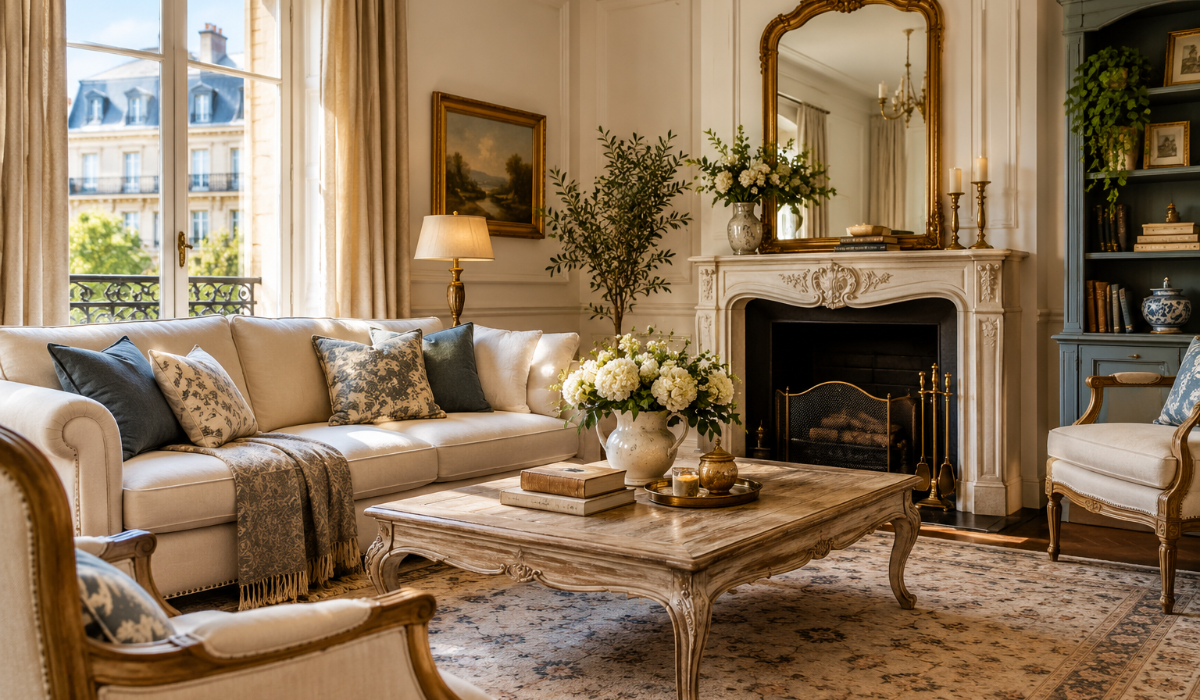
European style home decor is admired for its ability to make a home feel elegant without making it feel overly decorated. Rather than depending on a single trend, this approach draws inspiration from centuries of architecture, craftsmanship, regional traditions, antiques, natural materials, and everyday living. A European-inspired room can feel sophisticated and historic while still being comfortable enough for modern family life. That balance is one of the main reasons European interiors continue to influence contemporary interior design.
The phrase “European style” also covers a remarkably broad design vocabulary. French country interiors may combine aged furniture, soft colors, and refined details, while Scandinavian rooms emphasize functionality, natural light, pale woods, and uncluttered forms. Mediterranean interiors often introduce arches, terracotta, stone, textured plaster, and indoor-outdoor living, whereas English country rooms tend to celebrate books, antiques, patterns, layered textiles, and comfortable seating.
The good news is that you do not need a centuries-old European property to recreate this atmosphere. With the right color palette, furniture proportions, lighting, textures, artwork, and decorative accents, even a modern apartment can develop an old-world European character. This guide explains the essential principles of European style home decor and shows you how to adapt them to different rooms, budgets, and personal tastes.
Key Takeaways
- European style home decor focuses on character, craftsmanship, comfort, and timeless appeal rather than short-lived trends.
- Natural materials such as wood, stone, linen, wool, ceramic, leather, and aged metal are fundamental to the look.
- French, Scandinavian, Mediterranean, Italian, and English influences can all be incorporated into a European-inspired home.
- A restrained color palette provides the foundation, while texture and patina prevent neutral rooms from looking flat.
- Mixing antique and contemporary furniture creates depth and keeps European interiors from feeling like historical replicas.
- Architectural details such as arches, paneling, beams, moldings, fireplaces, shutters, and plaster walls can dramatically strengthen the aesthetic.
- Lighting should feel warm, layered, and atmospheric rather than excessively bright or clinical.
- Authenticity matters more than expensive labels, so handmade objects, vintage pieces, and meaningful artwork can be more valuable than mass-produced decorations.
- The best European interiors look collected over time rather than purchased as one matching furniture set.
- Modern European decor can be adapted to apartments, small homes, rental properties, and contemporary houses.
What Is European Style Home Decor?
European style home decor is not one rigid decorating category. Instead, it is an umbrella term for interior aesthetics influenced by the architecture, traditions, materials, furniture, and lifestyles of different European regions. The common thread is usually a preference for quality, proportion, natural materials, craftsmanship, historical references, and spaces that feel personal rather than overly coordinated. In many successful European-inspired interiors, modern convenience exists comfortably alongside objects that show age, craftsmanship, or cultural character.
This approach is different from simply filling a room with “European-looking” objects. A room can contain an ornate mirror, vintage chandelier, and antique table but still feel artificial if every item is selected from the same theme. European style works best when the room has visual restraint, useful furniture, variation in texture, and a sense that the objects have a reason for being there. Contemporary designers increasingly use this old-and-new balance to create interiors that feel layered and lived-in rather than staged.
At its core, European style home decor is about creating a home with a sense of history and permanence. That does not mean everything must actually be old, and it certainly does not mean sacrificing comfort. Instead, the goal is to combine contemporary functionality with materials, shapes, colors, and decorative details that have enduring visual appeal.
Why European Interiors Feel Timeless
One reason European interiors remain influential is their relationship with architecture. In older European homes, decoration often developed around the existing structure rather than attempting to conceal it. Stone walls, timber beams, plaster finishes, fireplaces, tall windows, decorative moldings, tiled floors, and original doors can become important visual elements rather than problems to hide.
Another reason is the use of materials that become more attractive as they age. Wood can develop a richer surface, brass can acquire patina, leather can soften, and natural stone can develop variations through years of use. Current design commentary continues to highlight patina, aged wood, brass, bronze, terracotta, leather, and vintage textiles as ways to create warmth and authenticity.
European interiors also tend to avoid excessive dependence on coordinated furniture collections. Instead, an antique chest may sit beside a contemporary sofa, while a modern lamp illuminates an old painting. This contrast gives the room personality and prevents it from looking like a showroom.
Key Characteristics of European Style Home Decor
| Design Element | Typical European Approach | Modern Adaptation |
| Color | Warm neutrals, muted tones, earthy shades | Cream, beige, taupe, olive, dusty blue |
| Furniture | Crafted, substantial, often vintage-inspired | Mix vintage pieces with contemporary silhouettes |
| Materials | Wood, stone, linen, wool, ceramic, leather | Use natural finishes wherever practical |
| Lighting | Layered and warm | Table lamps, wall lights, pendants, chandeliers |
| Accessories | Art, books, ceramics, antiques | Fewer but more meaningful objects |
| Architecture | Moldings, beams, arches, fireplaces | Add removable or simplified architectural details |
| Textiles | Linen, wool, velvet, cotton | Layer curtains, rugs, throws, and cushions |
| Overall Mood | Collected, comfortable, sophisticated | Relaxed luxury with practical modern features |
Natural Materials
Natural materials are one of the strongest foundations of European-inspired interiors. Wood, stone, linen, wool, leather, ceramic, rattan, plaster, and aged metals introduce variation that painted or synthetic surfaces often cannot reproduce. The objective is not to use every material in one room but to combine several textures in a controlled way.
A pale oak floor, linen sofa, stone coffee table, wool rug, ceramic lamp, and aged-brass hardware can create considerable visual interest even when the colors are understated. Scandinavian interiors demonstrate this principle particularly well through their combination of light wood, neutral colors, natural textures, and functional furniture.
Patina and Imperfection
Perfectly new surfaces can make a room feel sterile. European style home decor often benefits from signs of age, whether that comes from an authentic antique, a reclaimed material, a hand-finished surface, or a naturally textured fabric.
Patina should not be confused with damage or poor maintenance. The idea is to allow attractive evidence of use and craftsmanship to contribute to the atmosphere. An aged wooden table, slightly worn leather chair, vintage mirror, or old ceramic vase can give a contemporary room much more character than several inexpensive decorative objects.
Layered Textures
Texture becomes especially important when the color palette is neutral. Linen curtains, wool rugs, boucle upholstery, woven baskets, carved wood, plaster walls, ceramic accessories, and stone surfaces can all create depth without requiring dramatic colors.
The key is variation. If every surface is smooth and glossy, the room can feel flat, while too many rough materials can feel visually heavy. A sophisticated European interior typically combines soft, hard, matte, polished, woven, and tactile surfaces.
European Interior Design Styles to Know
European style home decor becomes easier to understand when you separate the major regional influences.
| Style | Defining Features | Ideal For |
| French Country | Antiques, soft colors, curved furniture, linen, rustic elegance | Warm and romantic homes |
| Scandinavian | Simplicity, light woods, functionality, neutral colors | Minimal and modern spaces |
| Mediterranean | Terracotta, arches, plaster, stone, warm colors | Relaxed, sunny interiors |
| English Country | Books, patterns, antiques, layered textiles | Cozy and collected homes |
| Italian-Inspired | Marble, wood, sculptural furniture, refined finishes | Sophisticated modern interiors |
| European Modern | Classic architecture with contemporary furniture | Balanced old-new interiors |
French Country
French country decor combines rustic and refined elements rather than choosing between them. Typical features include natural materials, vintage furniture, muted colors, curved forms, textiles, floral or toile patterns, chandeliers, and aged finishes. Architectural Digest describes the style as a relaxed interpretation of Provençal influences that combines natural elements with authentic French antiques.
For a contemporary interpretation, avoid filling the room with obviously themed French accessories. Instead, start with a neutral foundation, add one or two antique-looking furniture pieces, introduce linen upholstery, and finish with restrained floral or striped textiles.
Scandinavian
Scandinavian interiors prioritize simplicity, functionality, natural materials, light, and comfort. Pale woods, neutral walls, clean-lined furniture, soft textiles, and uncluttered layouts are central characteristics.
This style works especially well in smaller homes because its emphasis on visual simplicity can make rooms feel more spacious. However, Scandinavian design does not have to mean an entirely white room. Warm beige, soft gray, muted green, dusty blue, and natural wood can create a more welcoming interpretation.
Mediterranean
Mediterranean interior design draws from southern European regions including Spain, Italy, Greece, and southern France. Common elements include textured plaster, arches, natural stone, terracotta, wrought iron, carved wood, patterned tiles, earthy colors, and strong connections between indoor and outdoor living.
The easiest way to bring this influence into a contemporary home is through materials and color. A terracotta planter, limestone-look flooring, hand-finished ceramic tile, warm white walls, olive-green textiles, and natural wood furniture can suggest Mediterranean character without turning the room into a themed villa.
English Country
English country style is more layered and decorative than Scandinavian design. Books, artwork, patterned fabrics, comfortable armchairs, wood furniture, antique accessories, fireplaces, and floral or botanical motifs are common references. Architectural Digest highlights wallpaper, aged art, antiques, books, cozy seating, rustic beams, and patterned textiles as recognizable elements of English country interiors.
The modern version should feel relaxed rather than cluttered. Use a controlled color palette to connect different patterns, and allow empty space around important pieces so the room remains visually breathable.
European-Inspired Color Palettes
Color is one of the easiest ways to establish a European atmosphere without undertaking a major renovation. The most successful palettes usually feel connected to natural landscapes rather than highly saturated artificial colors.
| Palette | Main Colors | Accent Colors | Best Room |
| Parisian Neutral | Ivory, cream, taupe | Black, brass, dusty blue | Living room |
| Provençal | Warm white, beige | Lavender, olive, muted yellow | Kitchen |
| Mediterranean | White, sand, terracotta | Olive, cobalt, ochre | Dining room |
| Nordic | Soft white, pale gray | Sage, blue-gray, black | Bedroom |
| English Country | Mushroom, cream, muted green | Burgundy, navy, floral tones | Study |
| Italian Warm Neutral | Travertine, beige, walnut | Rust, olive, bronze | Living room |
A good rule is to select one dominant neutral, one supporting natural tone, and one or two accents. For example, warm white walls can be combined with walnut furniture, olive-green upholstery, and aged brass details. This approach creates cohesion while leaving room for artwork and personal objects.
Avoid assuming that every European interior should be white, beige, or gray. Mediterranean design can include vivid blue and yellow, French country can incorporate soft greens and blues, and English interiors can embrace richer colors and patterns.
Furniture and Materials
Furniture should feel substantial enough to anchor the room but not so heavy that it overwhelms the architecture. Look for pieces with visible craftsmanship, interesting proportions, curved edges, turned legs, natural wood grain, woven details, or tactile upholstery.
A useful strategy is to combine three furniture categories: one traditional or vintage-inspired piece, one simple contemporary piece, and one sculptural or characterful accent. This prevents the interior from becoming too traditional or too modern.
Materials Worth Considering
- Oak, walnut, ash, and reclaimed wood
- Limestone and natural stone
- Marble or marble-look surfaces
- Terracotta
- Linen and cotton
- Wool and natural-fiber rugs
- Leather
- Ceramic and handmade pottery
- Aged brass and bronze
- Wrought iron
- Cane and woven materials
Quality does not always mean expensive. A modest vintage wooden table with attractive proportions can contribute more character than an expensive mass-produced table that looks identical to hundreds of others.
How to Mix Old and New
One of the most important skills in European style home decor is learning how to combine historical references with contemporary comfort. A room filled entirely with antiques can feel formal or museum-like, while a room containing only new furniture may lack character. The strongest results usually come from deliberate contrast.
Start with a common thread that connects different periods. This might be a shared color, wood tone, metal finish, shape, or material. Designers and antique specialists commonly recommend considering color, material, scale, proportion, and overall atmosphere when combining old and new pieces.
For example, place a contemporary cream sofa beside an antique wooden side table. Add a modern floor lamp, a vintage mirror, and an abstract artwork in colors that repeat the furniture. The individual pieces can come from different eras while the room still feels unified.
The One-Statement-Piece Method
If you are nervous about mixing styles, begin with one standout piece. This could be an antique cabinet, ornate mirror, vintage chandelier, sculptural chair, old painting, or reclaimed dining table.
Once the statement piece is in place, keep surrounding furniture relatively restrained. This gives the eye a clear focal point and allows the character of the older item to become part of the overall design rather than competing with everything else.
European Style Living Room Ideas
The living room is often the best place to experiment with European style home decor because it offers opportunities for furniture, lighting, textiles, artwork, and accessories.
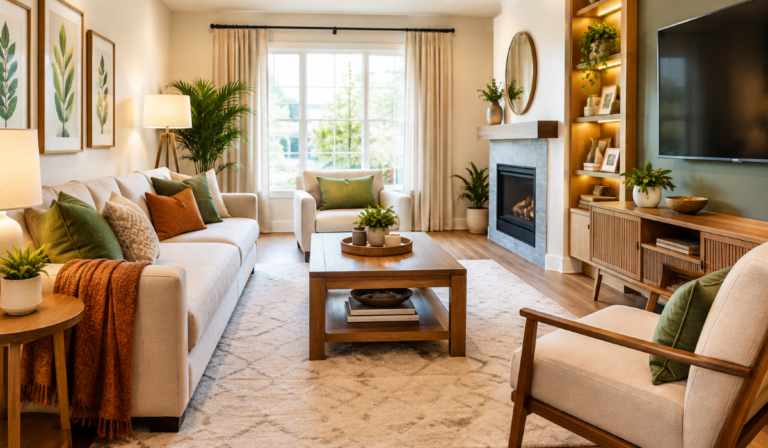
Begin with the seating arrangement rather than decorative objects. Choose a comfortable sofa with a timeless silhouette, then add two chairs or occasional seats that differ slightly in shape or material. Instead of matching every item, create a relationship through color, scale, or fabric.
A large area rug can define the seating zone and introduce texture. Add a wooden or stone coffee table, then layer smaller objects such as books, ceramics, a bowl, or a candle without filling every surface.
Lighting should come from multiple sources. A central pendant or chandelier can establish the mood, while table lamps, wall sconces, and floor lamps provide softer illumination at different heights.
Artwork is another major opportunity. Instead of buying a collection of generic prints, choose pieces that reflect your interests, architecture, landscape, photography, or local culture. European interiors often feel authentic because the objects appear collected rather than purchased solely to complete a color scheme.
European Style Bedroom Ideas
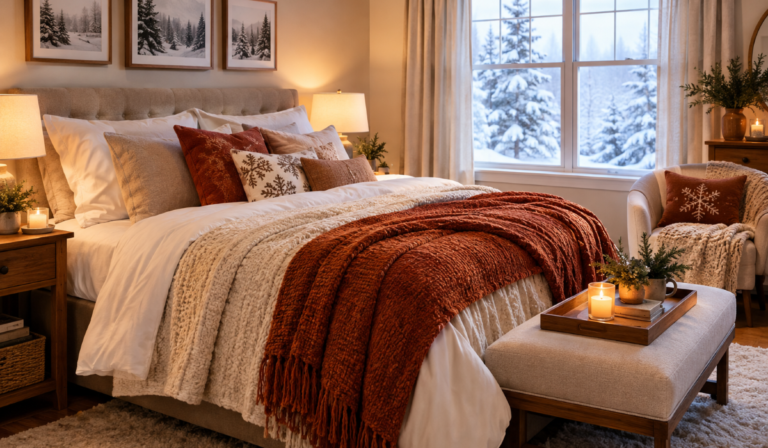
A European-inspired bedroom should feel restful, tactile, and slightly understated. Start with a calm wall color such as warm white, mushroom, pale beige, soft gray, or muted green.
Choose a bed with an upholstered, wood, or subtly traditional frame. Linen bedding is particularly useful because its relaxed texture prevents the room from looking too formal, while a wool or woven throw can add another layer of softness.
Bedside tables do not necessarily need to match. A vintage stool on one side and a small wooden cabinet on the other can create a collected appearance as long as the visual weight remains balanced.
Keep decorative accessories selective. A ceramic lamp, framed artwork, old-style mirror, small vase, and a few books can be enough to make the bedroom feel complete.
European Kitchen and Dining Room Ideas
European kitchens often balance practicality with warmth. Instead of making every surface glossy and perfectly uniform, introduce natural materials, visible craftsmanship, and traditional references.
Consider wood cabinetry, stone countertops, unlacquered or aged-looking metal hardware, ceramic tile, open shelving, linen textiles, and handmade-looking pottery. If a complete renovation is not practical, changing cabinet hardware, lighting, stools, textiles, and accessories can create a noticeable difference.
For dining areas, a solid wood table is a strong foundation. Pair it with chairs that are comfortable and visually lighter than the table, or intentionally combine different chair styles around it.
| Kitchen or Dining Feature | European-Inspired Choice | Budget Alternative |
| Cabinets | Painted or natural wood | Repaint existing cabinets |
| Countertop | Marble or limestone | Quality stone-look surface |
| Backsplash | Handmade ceramic tile | Textured subway tile |
| Hardware | Aged brass or bronze | Brushed metal hardware |
| Dining table | Solid wood | Vintage secondhand table |
| Lighting | Pendant or traditional fixture | Statement budget pendant |
| Accessories | Ceramic, linen, wood | Thrifted pottery and textiles |
European Bathroom Decor
European bathroom design often relies on restraint rather than excessive decoration. Natural stone, marble, aged metal, ceramic tile, plaster-like walls, and traditional silhouettes can create an elegant foundation.
A small bathroom can benefit from a simple palette of warm white, beige, stone, or muted gray. Introduce character through a vintage-style mirror, wall-mounted lighting, textured towels, ceramic accessories, and carefully chosen hardware.
Mediterranean-inspired bathrooms can go further with terracotta tiles, arched niches, textured plaster, patterned ceramics, and natural stone.
The key is to preserve visual simplicity. If the floor has a strong pattern, keep the walls calmer. If the mirror and lighting are decorative, avoid adding too many competing accessories.
Lighting and Accessories
Lighting can make or break European style home decor. Even an excellent furniture arrangement can feel cold if it is illuminated entirely by bright overhead lighting.
Use a layered approach:
- Ambient lighting provides general illumination.
- Task lighting supports reading, cooking, working, or grooming.
- Accent lighting highlights artwork, architecture, shelves, or decorative objects.
Warm bulbs, shaded table lamps, wall sconces, candles, and dimmable fixtures can help create a more intimate atmosphere.
Accessories should support the story of the room rather than simply occupy empty surfaces. Consider books, framed artwork, ceramics, mirrors, antique objects, woven baskets, plants, candlesticks, textiles, and collected travel pieces.
European Decor for Small Spaces
Small homes can benefit greatly from European design principles because many European interiors prioritize function, proportion, and efficient use of space. Scandinavian design in particular emphasizes clean lines, functionality, natural materials, and uncluttered rooms.
Choose furniture carefully rather than automatically selecting the smallest possible pieces. A well-proportioned sofa can look better than several tiny chairs, while a tall bookcase can take advantage of vertical space.
Mirrors can increase the feeling of openness, while curtains hung close to the ceiling can emphasize height. Use a limited palette and repeat materials across the room to create visual continuity.
Small-Space Checklist
- Choose furniture with useful storage.
- Keep the main color palette restrained.
- Use one substantial focal piece.
- Prioritize natural light.
- Use mirrors strategically.
- Choose furniture that allows comfortable movement.
- Keep decorative objects edited rather than excessive.
- Use vertical shelving for books and artwork.
- Combine textures instead of adding more colors.
How to Create the Look on a Budget
You do not need a large decorating budget to create European style home decor. In fact, the philosophy works particularly well with secondhand furniture because vintage and antique pieces can provide the character that new mass-produced furniture often lacks.
Start by identifying what you already own. A wooden table can be refinished, an old frame can be repainted, and mismatched chairs can be unified with similar seat cushions. Before buying anything, remove unnecessary items so you can understand what the room actually needs.
Budget Strategy
| Budget Level | Best Investments | What to Avoid |
| Low | Paint, textiles, lamps, secondhand decor | Buying many small accessories |
| Moderate | Rug, vintage furniture, lighting | Matching furniture sets |
| Higher | Flooring, cabinetry, stone, custom furniture | Trend-driven renovations |
| Premium | Architectural restoration, antiques, craftsmanship | Overdecorating every surface |
Thrift stores, antique markets, estate sales, local craftspeople, and secondhand marketplaces can be useful sources for character pieces. Focus on condition, proportions, materials, and authenticity rather than simply searching for something labeled “European.”
Common Mistakes to Avoid
The first common mistake is turning European style into a theme. Buying several decorative objects that all display obvious European motifs can make a home feel staged instead of sophisticated.
The second mistake is choosing too many ornate pieces. European interiors can certainly include carved furniture, chandeliers, decorative mirrors, and classical details, but these elements need visual breathing room.
Another mistake is ignoring comfort. A beautiful chair that nobody wants to sit in is not successful residential design. European style home decor should support real life, including reading, entertaining, relaxing, working, eating, and spending time with family.
Avoid making every room identical as well. A home can have a Mediterranean kitchen, Scandinavian bedroom, French-inspired living room, and English-style study while still feeling cohesive. Use repeating materials, colors, metals, and architectural details to connect the spaces.
European Style Home Decor: Pros and Cons
| Pros | Cons |
| Timeless appearance | Can become visually heavy if overdone |
| Works with antiques and secondhand furniture | Authentic antiques may require research |
| Natural materials create depth | Natural materials can cost more |
| Easy to personalize | Mixing styles requires planning |
| Works across many architectural styles | Too many decorative details can create clutter |
| Can age gracefully | Patina and vintage finishes require maintenance |
| Strong emphasis on craftsmanship | High-quality pieces may require patience to source |
The biggest advantage is flexibility. Because European design is not limited to one specific period or country, you can interpret it in a way that suits your architecture and lifestyle.
The main challenge is restraint. It is easy to keep adding attractive objects until the room loses its sense of calm. The best European-inspired rooms often contain fewer pieces than expected, but each piece has stronger visual, functional, or emotional value.
Step-by-Step Decorating Plan
If you are starting from scratch, use a structured process instead of shopping immediately.
| Step | Action | Goal |
| 1 | Study your architecture | Identify existing character |
| 2 | Select a regional influence | Establish direction |
| 3 | Choose a palette | Create cohesion |
| 4 | Select large furniture | Establish proportion |
| 5 | Add natural materials | Build texture |
| 6 | Introduce vintage elements | Add history |
| 7 | Layer lighting | Create atmosphere |
| 8 | Add artwork and accessories | Personalize |
| 9 | Edit the room | Remove unnecessary pieces |
| 10 | Live with it | Refine gradually |
Study the Room
Look at the floor, windows, ceiling height, doors, walls, natural light, and existing architectural details. These features should influence your decorating decisions.
Choose Your European Influence
Decide whether you are drawn toward French country, Scandinavian, Mediterranean, English country, Italian-inspired, or a broader European modern aesthetic. You can mix influences, but having a primary direction makes decisions easier.
Establish Your Palette
Select your dominant neutral, supporting color, and accents before buying furniture. This prevents random purchases from creating visual inconsistency.
Buy Large Pieces First
Invest your attention in the sofa, bed, dining table, major storage, and rug. Accessories should come later because they are easier to coordinate once the room’s proportions are established.
Add Character Slowly
Introduce vintage furniture, artwork, ceramics, books, mirrors, and textiles over time. A home that evolves gradually often looks more authentic than one decorated in a single weekend.
Expert Tips for a More Authentic Look
Prioritize proportion over decoration. A beautifully proportioned room with simple furniture can look more sophisticated than a room overloaded with expensive accessories.
Use repetition carefully. Repeat a wood tone, metal finish, color, or fabric across the room to establish cohesion without making everything match.
Let materials show their character. Natural stone does not need to look perfectly uniform, and wood does not need to be flawless. Variation is part of the appeal.
Mix eras intentionally. A contemporary sofa can make an antique table look fresher, while a vintage mirror can soften a minimalist room. The contrast should feel deliberate rather than accidental.
Use negative space. Empty areas around important objects help the room feel calm and make individual pieces more noticeable.
Choose real texture over visual imitation. Linen, wool, wood, stone, ceramic, and aged metals generally provide more depth than printed surfaces designed to imitate them.
Avoid buying everything at once. Some of the most convincing European interiors feel collected because objects were acquired from different places and at different times.
Make comfort non-negotiable. European style home decor should be beautiful enough to admire but practical enough to live with every day.
Think beyond trends. A timeless room should still look appropriate several years from now. Current design coverage increasingly emphasizes antiques, patina, craftsmanship, and the contrast between old and new, suggesting that character-rich interiors continue to have strong relevance.
Conclusion
European style home decor is ultimately less about copying a particular European country and more about understanding the principles that make these interiors feel enduring. Natural materials, thoughtful proportions, comfortable furniture, layered lighting, restrained colors, meaningful objects, and a mixture of old and new can create a home that feels sophisticated without becoming formal. French country interiors offer relaxed elegance, Scandinavian rooms demonstrate functional simplicity, Mediterranean spaces celebrate texture and architectural warmth, and English country homes show how antiques and patterns can create a deeply personal atmosphere.
You also do not need an antique European property or a luxury decorating budget to achieve the look. Start with what your home already offers, choose a clear design direction, establish a natural color palette, and invest in a few pieces with genuine character. Vintage furniture, handmade ceramics, linen textiles, warm lighting, artwork, and natural finishes can transform an ordinary room without requiring a complete renovation.
Most importantly, allow the design to evolve. The most convincing European style home decor does not feel like a showroom assembled around a single trend; it feels like a real home shaped by architecture, people, memories, craftsmanship, and time. When comfort and authenticity guide your decisions, the result can remain beautiful long after today’s decorating trends have disappeared.
Frequently Asked Questions
What furniture works best with European-inspired interiors?
Look for comfortable sofas, upholstered armchairs, solid wood tables, vintage cabinets, classic dining chairs, sculptural occasional tables, and furniture with visible craftsmanship. Avoid buying an entire matching suite if you want a more collected appearance. Combining contemporary and vintage silhouettes usually creates more depth.
How do I mix modern and antique furniture successfully?
Use a common thread such as color, material, scale, or finish to connect the pieces. For example, a contemporary cream sofa can work beautifully with a dark antique wooden table if the room repeats warm wood tones elsewhere. Contrast is valuable, but the furniture still needs to relate in proportion and overall visual weight.
What makes European decor look authentic rather than themed?
Authenticity comes from restraint and individuality. Instead of filling a room with stereotypical European decorations, focus on natural materials, good proportions, meaningful artwork, vintage pieces, comfortable furniture, and architectural character. The room should look like a home influenced by European design rather than a themed display.
Is Scandinavian decor considered European style home decor?
Yes. Scandinavian design is one of the major regional influences within the broader European design landscape. It is especially known for functionality, simplicity, natural materials, light wood, neutral colors, clean lines, and a strong relationship with natural light.
What is the easiest room to decorate in European style?
The living room is usually the easiest place to begin because it allows you to combine a sofa, rug, lighting, artwork, tables, textiles, and accessories. A bedroom is another relatively simple option because linen bedding, warm lighting, natural wood, and restrained colors can create a strong European atmosphere without major structural changes.